







Quality Doesn’t End at Launch. Neither Do We.
3Shadz connects structured verification before release with continuous care after it, engineering confidence into your software across its working life, not just at the moment it ships.
Quality Engineered Across the Lifecycle, Not Bolted On at the End
Quality Assurance & Support is one of the service domains behind every 3Shadz engagement: the discipline of building confidence into software before it ships, and preserving that confidence for as long as the application stays in use.
It brings together two connected capabilities. QA & Software Testing verifies that a build behaves correctly, performs under load, and holds up across the environments your users actually rely on. Application Support & Maintenance keeps that same application stable, current, and watched once it is carrying real traffic and real consequences.
You can start wherever the risk is greatest (a release that keeps slipping, a defect that keeps resurfacing, an application nobody is actively watching in production) and grow the engagement as confidence in the platform grows.
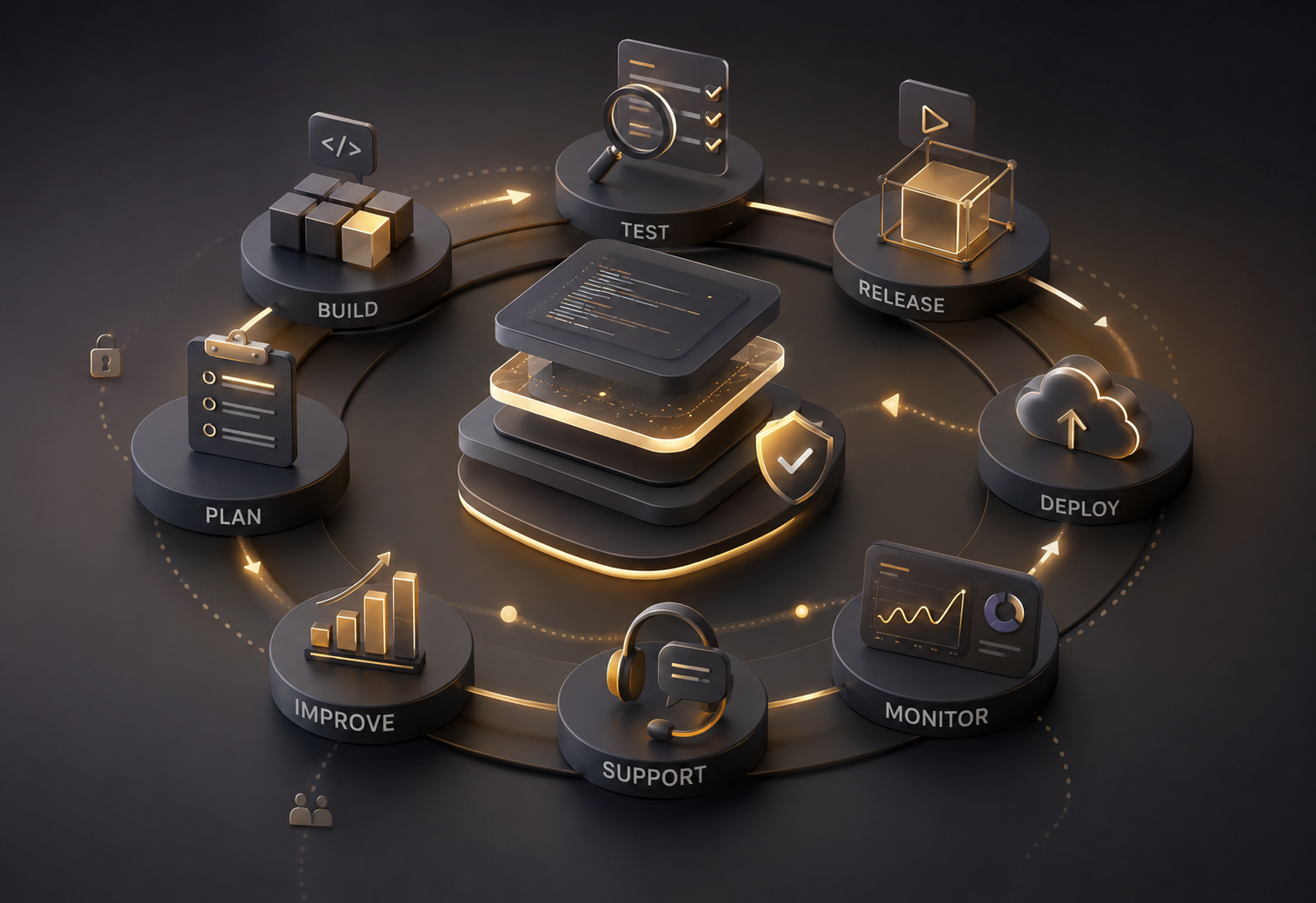
Confidence Before Release. Reliability After It.
Quality Assurance & Support is not one activity: it’s two disciplines that hand off to each other continuously. What QA verifies before a release, Support has to live with after it. What Support learns in production shapes what QA verifies next time.
QA & Software Testing
Verification built around how your application is actually used (functional accuracy, performance under load, and release readiness), so defects are found on your terms, not your users’.
- Quality engineering strategy & test architecture
- Functional, regression, integration & end-to-end testing
- Automation & continuous testing within CI/CD
- Performance, scalability & release readiness validation
Application Support & Maintenance
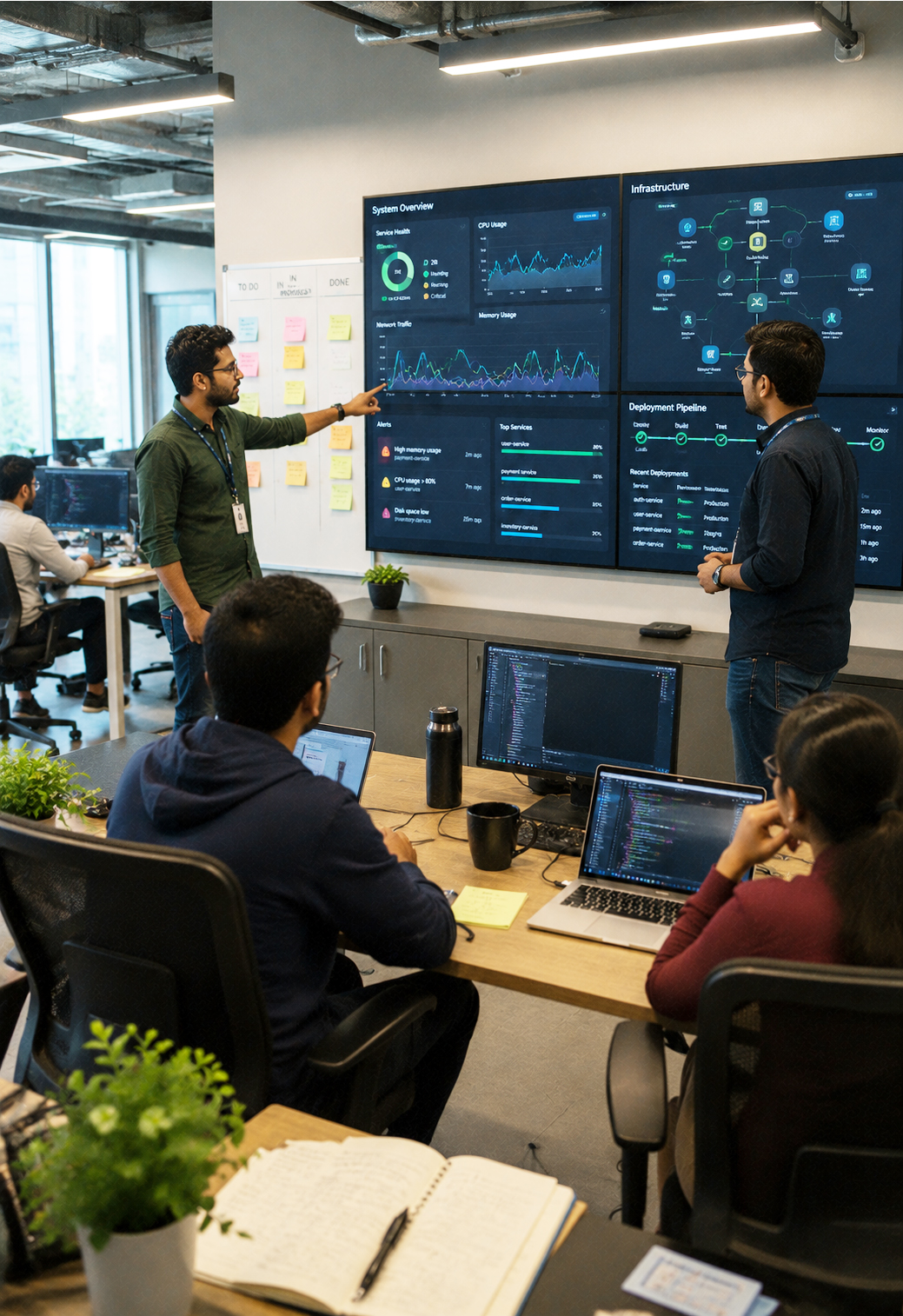
Ongoing care for applications already carrying real traffic, watching for trouble, resolving it quickly, and improving the system as it ages, so reliability doesn’t quietly decay after launch.
- Application monitoring & health checks
- Incident investigation & defect resolution
- Preventive, corrective & adaptive maintenance
- Upgrades, dependency updates & performance tuning
Verification and Operational Care, Broken Down
Every engagement draws from the same two pools of work, scoped to what your application and your risk actually call for, not applied as a fixed package.
Inside QA & Software Testing
Inside Application Support & Maintenance
A Controlled Path From Change to Confidence
The same disciplined path carries every engagement, whether it starts with a single test cycle or an ongoing support retainer.
Assess
Understand the application, its risk areas, and where quality or reliability is currently breaking down.
Architect the Approach
Design the right mix of test coverage, automation, and, where relevant, a support model suited to the application’s criticality.
Verify
Execute functional, non-functional, and release-readiness testing against real usage patterns, not a generic checklist.
Gate the Release
Confirm the build meets agreed criteria before it goes out, with defects triaged and resourced, not just logged.
Observe in Production
Monitor the live application and investigate issues as they surface, rather than waiting for users to report them.
Improve
Feed what production reveals back into the next round of testing, closing the loop between release and reliability.
From Uncertain Releases to Software You Can Rely On
Neither testing nor support can promise software with no defects, what changes is how early problems are found, how deliberately they’re resolved, and how much you can see in between.
Fragmented Testing, Reactive Support
- Releases go out on hope rather than evidence
- Testing happens late, and only when time allows
- The same defects resurface release after release
- Issues surface through user complaints, not monitoring
- Nobody is quite sure how the application is behaving right now
- Fixes and workarounds pile up undocumented
Structured Verification, Observed Operations
- Releases go out against agreed, verified criteria
- Testing is planned into the build, not squeezed in after it
- Recurring defects are traced to root cause and closed
- Issues are caught through active monitoring, often before users notice
- Application health is visible on an ongoing basis
- Fixes, upgrades and decisions are documented as they happen
Built Around Accountability, Not Just Activity
A lot of quality programs stall because nobody owns the outcome. Here’s what keeps ours accountable.
One Team, Two Handoffs That Actually Connect
Testing and support aren’t separate vendors passing a ticket: the same standards and, wherever possible, the same people carry across both.
Risk-Based, Not Checklist-Based
Effort is weighted toward what actually matters to your business and users, not spread evenly across everything.
Automation Where It Pays Off
We automate what benefits from repetition and keep human judgment where it matters, instead of automating for its own sake.
Honest About What’s Found
Defects and risks are reported plainly, with context and priority, not buried in a pass/fail summary.
Built for Legacy, Not Just Greenfield
We regularly take on applications we didn’t build, starting with an honest technical assessment.
Connected to the Rest of Your Platform
The same team can reach into Cloud & DevOps, Software Engineering or Data & Analytics when a root cause sits outside the application itself.
Practical Tooling, Chosen to Fit Your Stack
We select testing, performance, and monitoring tools around your existing environment and team, rather than standardizing on one vendor.
Test Automation & Frameworks
- Selenium
- Playwright
- Cypress
- Appium
- Postman & REST Assured
Performance & Load
- Apache JMeter
- k6
- Gatling
- Locust
Monitoring & Observability
- Datadog
- New Relic
- Grafana
- Sentry
Defect & Release Management
- Jira
- Azure DevOps
- TestRail
- Xray
Quality Assurance & Support: Frequently Asked Questions
QA & Software Testing builds confidence before and during a release: functional accuracy, performance, and release readiness. Application Support & Maintenance preserves that confidence afterward, monitoring, incident response, defect resolution, and upgrades once the application is live. Together they form one continuous quality lifecycle, not two unrelated services.
No. Most engagements start with whichever discipline addresses the more urgent risk (a release under pressure, or an application already live and unmonitored) and expand once the value is clear.
Cloud & DevOps focuses on the infrastructure and delivery pipeline: environments, deployment automation, and platform-level observability. Quality Assurance & Support works one layer up, at the application itself: whether the software behaves correctly, performs as expected, and stays healthy for the people using it. The two teams work closely together where an issue spans both.
Yes. Most support engagements and many testing engagements begin on applications built by another team or an in-house group. We start with a structured technical assessment and knowledge transfer before taking on ongoing responsibility.
Depending on the engagement, testing can cover regression, integration, end-to-end, API, mobile, and cross-browser validation, along with performance, scalability, accessibility, compatibility, and security-focused testing. Scope is agreed up front based on what the application actually needs.
It’s triaged for impact and urgency, investigated to its root cause rather than just patched at the surface, and resolved under the agreed support model. What’s learned typically feeds back into what gets tested before the next release.
Let’s Make Your Releases, and Your Production Environment, Something You Can Trust.
Whether you need a single testing engagement, an ongoing support retainer, or both working together, our Quality Assurance & Support team can help you get there.