



From Ideas to Technology That Works.
A successful technology project needs more than good engineering.
It needs a clear understanding of the problem, thoughtful planning, continuous collaboration, disciplined execution, and the ability to adapt when requirements change.
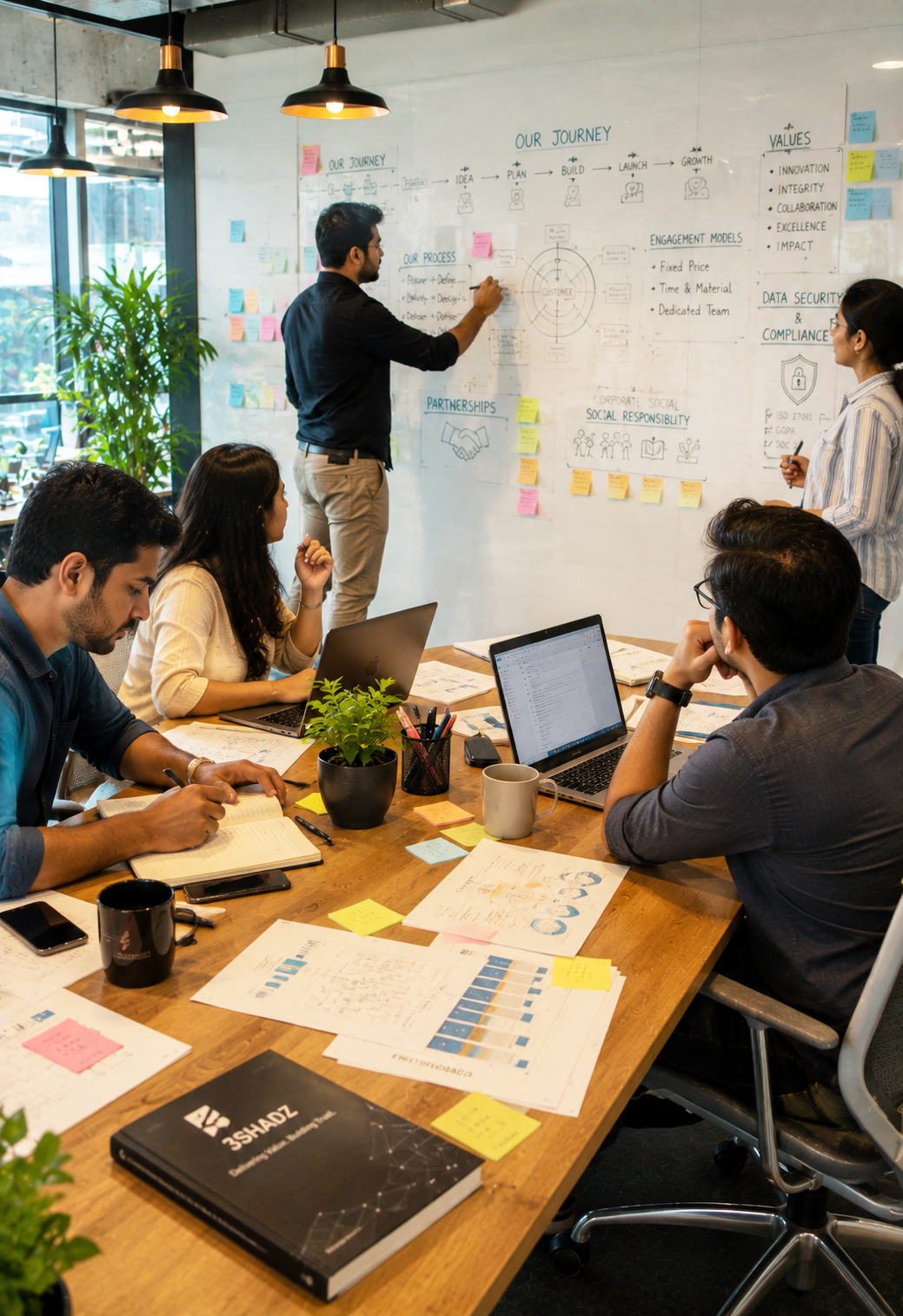
At 3Shadz Software Solutions, we follow a collaborative, iterative, and transparent approach that connects business objectives with technology delivery.
From the first conversation through launch and beyond, we work alongside our clients to turn ideas into digital solutions that are practical, scalable, and ready to evolve.
Understand. Design. Build. Validate. Evolve.

A Process Built Around Your Goals
No two technology projects are exactly alike.
A startup building its first digital product has different needs from an enterprise modernizing a business-critical application. An AI initiative may require a different path from a cloud transformation or software modernization project.
That’s why our process provides a clear framework without treating every project as identical.
We adapt the depth, sequence, and focus of each stage to the business objective, technology environment, project complexity, and desired outcome.
Clear enough to provide direction.
Flexible enough to adapt.
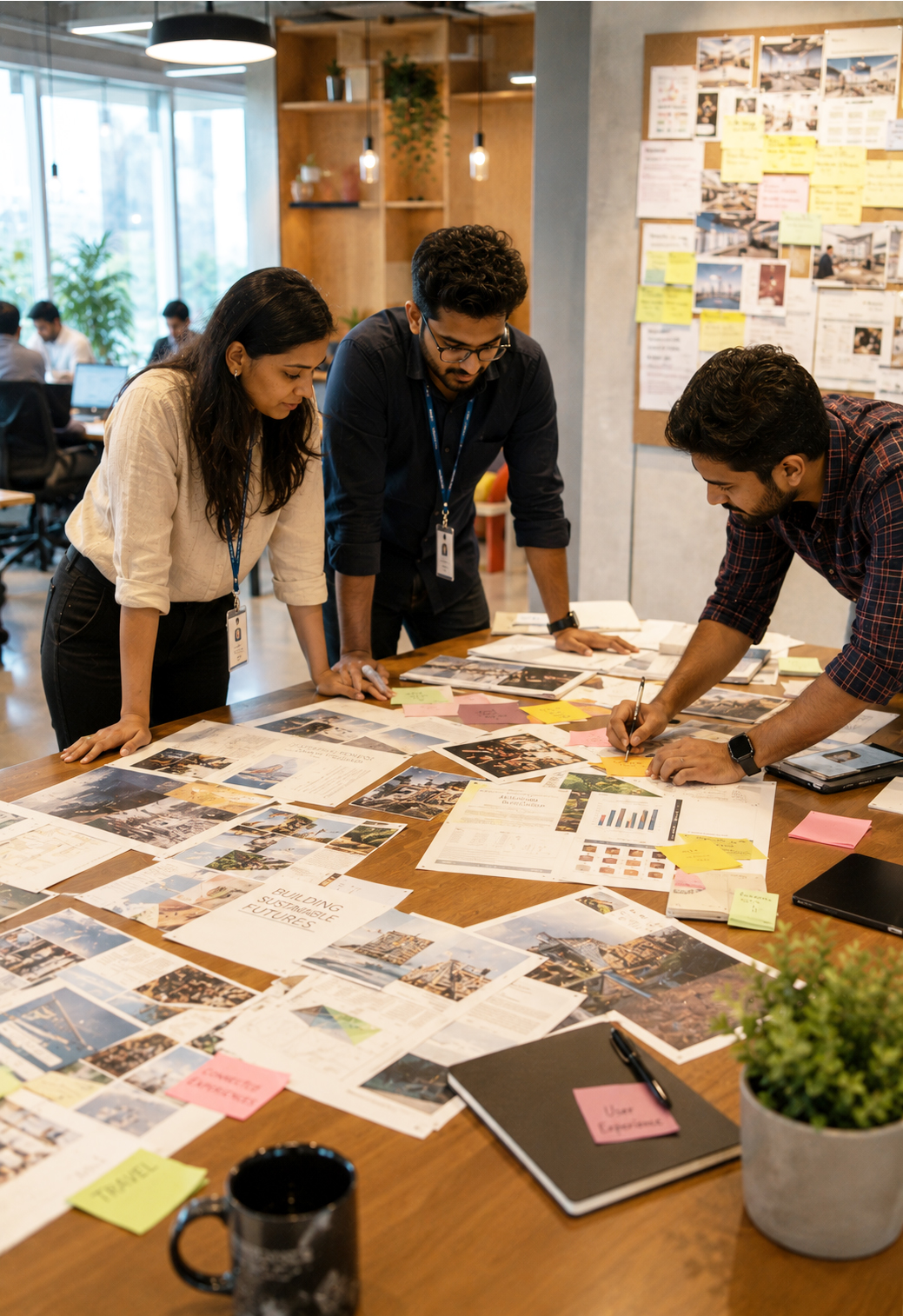
Understand Before We Build
Every successful project starts with understanding.
We begin by learning about your business, users, existing technology, challenges, priorities, and desired outcomes.
This stage helps us separate the underlying business problem from the initial technology request and establish a practical direction for the work.
To create a shared understanding of what needs to be solved, why it matters, and what success should look like.
What we explore
- Business objectives
- Current technology environment
- User and customer needs
- Functional requirements
- Technical requirements
- Existing systems and integrations
- Data considerations
- Risks and constraints
- Project priorities
- Success measures
What we create
Turn Ideas Into Experiences
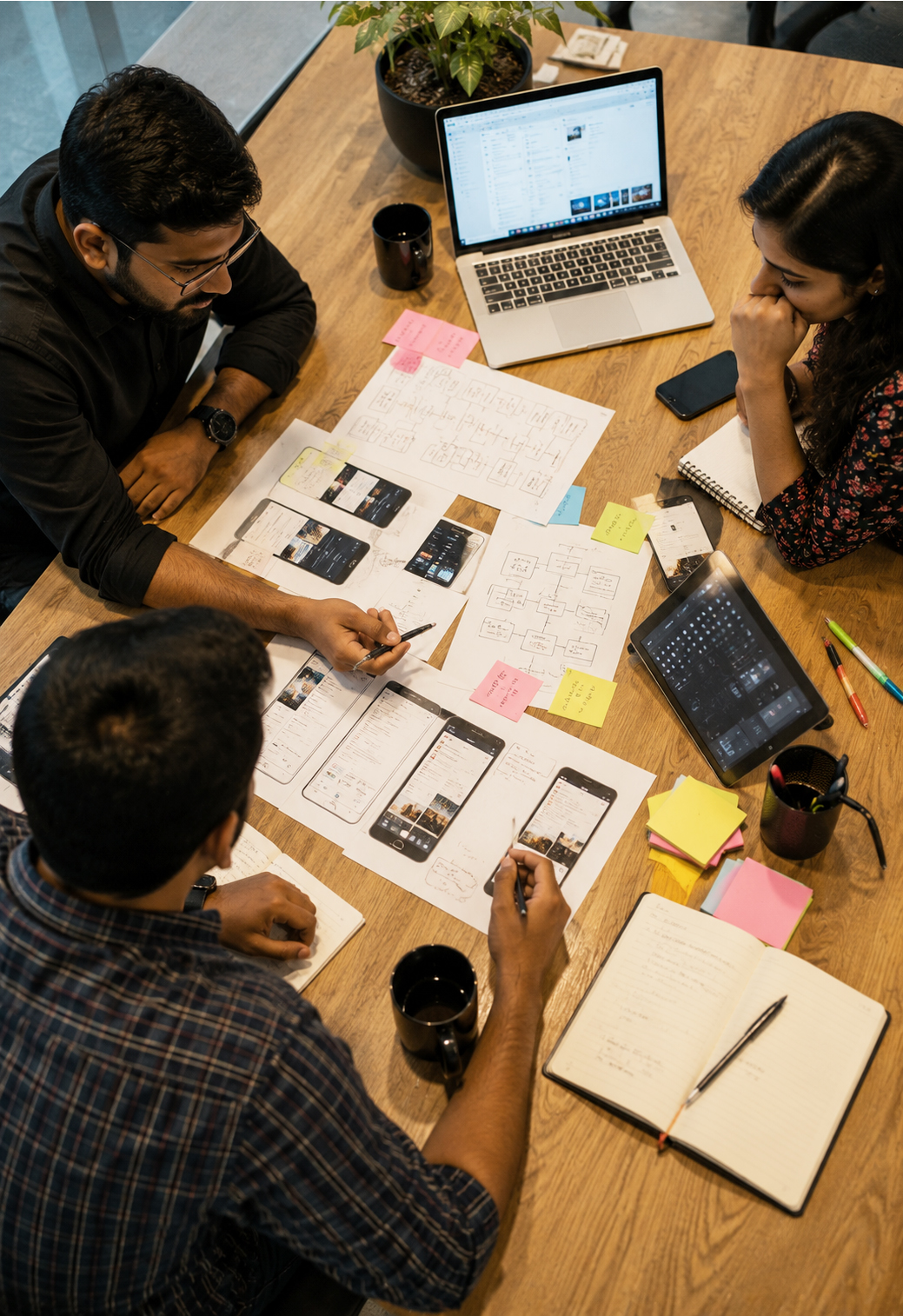
Once the direction is clear, we translate ideas and requirements into experiences and solution designs that can be explored, discussed, and validated.
Design is not simply about how a product looks. It is about how people understand it, interact with it, and accomplish what they need to do.
Where appropriate, prototypes help stakeholders see and interact with an idea before significant engineering effort is invested.
To validate the experience, reduce uncertainty, and create a clear foundation for development.
Our design process may include
- User experience design
- User interface design
- Information architecture
- User journeys
- Wireframes
- Interactive prototypes
- Design systems
- Experience validation
Engineer the Solution
With the direction and experience defined, our engineering teams turn the solution into working technology.
We focus on creating software that is designed around the project’s requirements while considering maintainability, performance, scalability, security, and future evolution.
We use appropriate engineering practices and technologies based on the needs of the solution rather than forcing every project into the same technical approach.
To build reliable technology that solves the intended problem and provides a strong foundation for future growth.
Engineering may involve
- Application development
- API development
- Backend engineering
- Frontend development
- Mobile development
- AI integration
- Data integration
- Cloud development
- Third-party integrations
- Application modernization
- Database development
Validate Before It Reaches Your Users
Quality is part of the development process, not an activity that begins at the end.
We validate the solution throughout development and conduct appropriate testing before release. The exact testing approach depends on the project, technology, risk profile, and business requirements.
We work with stakeholders to identify issues, refine the solution, and prepare it for release.
To enter production with greater confidence that the solution performs as expected and is ready for its intended users.
Testing may include
- Functional testing
- Integration testing
- User acceptance testing
- Performance testing
- Compatibility testing
- Security validation
- Regression testing
- Usability validation
Move From Development to Reality
A solution becomes meaningful when people can use it.
We support the transition from development environments into production and help establish the technology practices needed to operate the solution effectively.
Once the solution is live, real usage provides information that cannot always be discovered during development. We use that feedback to identify opportunities for improvement.
To create a stable production environment and continuously improve the technology as real-world needs become clearer.
Depending on the project, this may involve
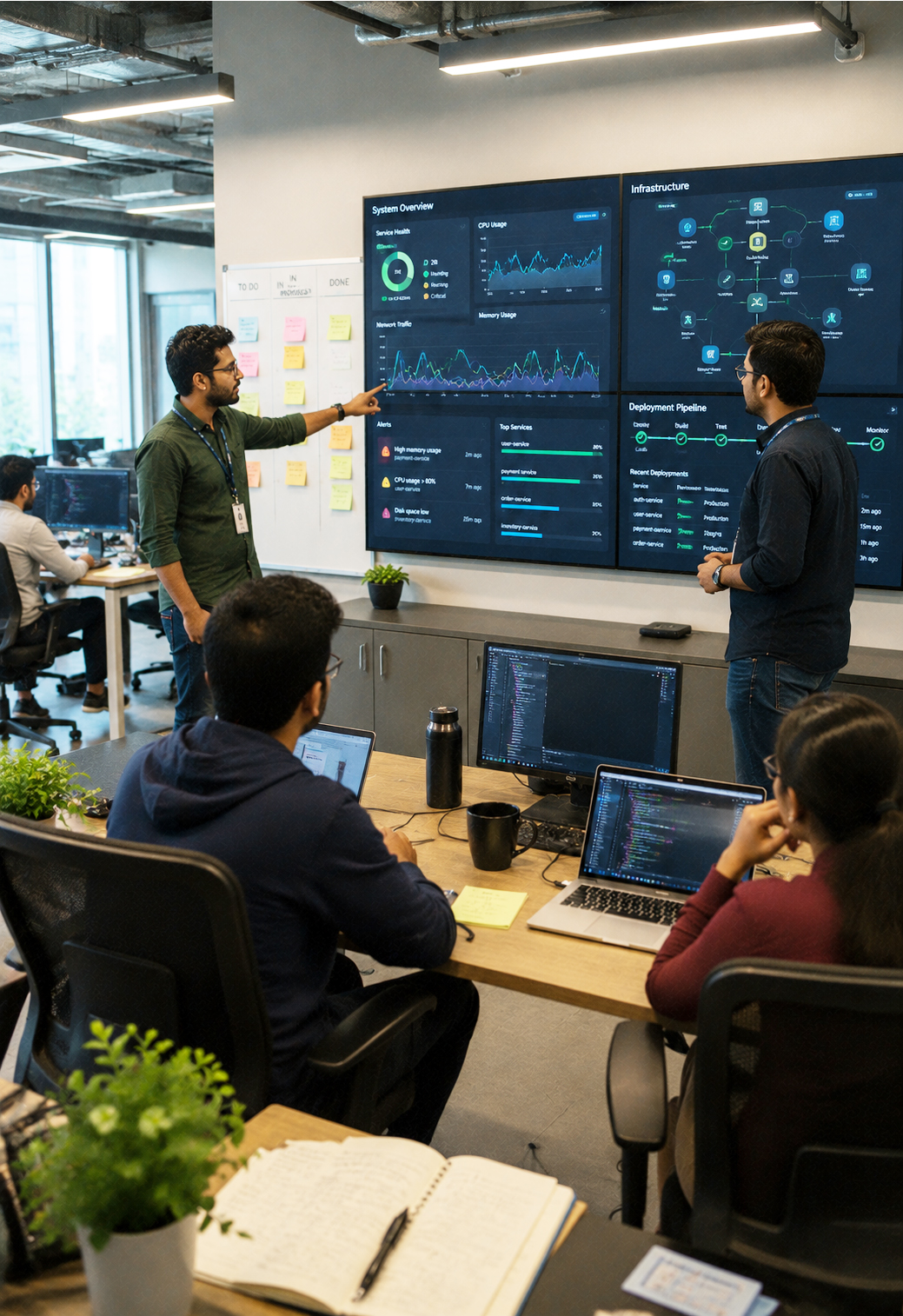
- Cloud deployment
- CI/CD practices
- Environment configuration
- Release management
- Application monitoring
- Performance optimization
- Infrastructure optimization
- Scalability planning
- Operational improvements
Technology Continues After Launch
Launching a product or application is not the end of its journey.
Businesses change. Users change. Technology changes. New requirements emerge. Applications need maintenance, improvements, optimization, and sometimes modernization.
Our ongoing support can help organizations maintain and evolve their technology after launch.
To help your technology remain useful, reliable, and aligned with the business as it evolves.
Depending on the engagement, this may include
- Application support
- Maintenance
- Monitoring
- Performance improvements
- Bug resolution
- Feature enhancements
- Technical optimization
- Cloud optimization
- Application modernization
- Security improvements
- New technology integration
One Process. Continuous Progress.
Understand the business and define the direction.
02Design & PrototypeTurn ideas into experiences that can be explored and validated.
03Build & IntegrateEngineer and connect the technology.
04Test & LaunchValidate quality and prepare for production.
05Deploy & OptimizeRelease, monitor, and improve the solution.
06Support & EvolveMaintain, enhance, and adapt as the business changes.
The process doesn’t really end at launch.
It evolves with the product and the business.
Four Principles Behind Our Process
The stages describe what happens. These principles describe how we work.
Collaborative
Work Together, Not in Silos.
We work closely with clients and stakeholders throughout the engagement. Questions, decisions, feedback, and changes are shared rather than hidden behind a delivery process. The goal is to create a working relationship where everyone understands what is being built and why.
Agile
Adapt as We Learn.
Requirements can change as teams gain new information and users provide feedback. We use iterative ways of working where appropriate so that progress can be reviewed, assumptions can be tested, and priorities can be adjusted when needed. Agile for us is not about following ceremonies for their own sake: it is about creating useful progress while remaining adaptable.
Transparent
Clear Progress. Clear Decisions.
Technology projects involve decisions, dependencies, risks, and trade-offs. We believe these should be visible. We aim to maintain clear communication around progress, priorities, decisions, risks, dependencies, changes, and next steps. No unnecessary mystery around the work.
Customer-Focused
Your Business Defines Success.
The success of a technology project should not be measured only by whether software was delivered. It should be connected to the outcome the business wanted to achieve, keeping the client’s goals, users, priorities, and business context at the center of the work. Your goal is the reason for the process.
A Framework, Not a Rigid Formula
Our six-stage process provides structure, but not every project needs the same journey.
A small product initiative may move quickly from discovery to design and development. A complex enterprise modernization program may require deeper discovery, architecture, integration, security, testing, and phased deployment. An AI initiative may require experimentation and validation before full-scale engineering.
The process adapts to the situation.
The framework stays clear.
The execution adapts to the challenge.
Where Does Your Technology Journey Begin?
Building Something New
Start with discovery, product definition, design, engineering, and launch.
Modernizing Existing Technology
Begin with understanding the current architecture, identifying constraints, prioritizing modernization opportunities, and defining a practical roadmap.
Exploring AI
Begin with identifying useful opportunities, validating feasibility, testing ideas, and determining where AI can create measurable value.
Moving to the Cloud
Assess the current environment, define the target architecture, plan migration, execute the transition, and optimize the resulting environment.
Improving an Existing Product
Start with the current experience and technology, identify improvement opportunities, prioritize changes, and continuously evolve the product.
Extending an Internal Team
Align our team with your existing processes, technology environment, priorities, and delivery practices.
You Should Always Know Where Things Stand
A good process is not just a series of technical stages. It is also a communication framework.
Throughout an engagement, we aim to keep stakeholders informed so that shared visibility allows important decisions to happen at the right time.
- What has been completed
- What is currently being worked on
- What comes next
- What decisions are needed
- What risks have emerged
- What has changed
- What we recommend
Quality Is Not a Final Step
We don’t believe quality should be treated as something added immediately before launch. It should influence decisions throughout the journey.
From requirements and architecture to design, engineering, testing, deployment, and support, we consider factors such as:
Build quality into the journey, not onto the end.
The Beginning of the Next Phase
Once a solution reaches production, the business begins learning from real usage. Users provide feedback. Performance data becomes available. New requirements emerge. Business priorities shift.
That information creates the next opportunity to improve.
Launch
Learn
Optimize
Improve
Evolve
This continuous cycle helps technology remain aligned with the business instead of becoming outdated after its initial release.
Ready to Build What’s Next?
Whether you’re starting a new digital product, modernizing an existing application, exploring AI, moving to the cloud, or improving a technology platform, the right process can make the journey clearer.
Let’s understand what you’re trying to achieve and determine the right path forward.