









Site Logo

Get in touch

Custom Software Solutions

Software Built Around The Way You Work

Stop bending your business to fit someone else’s product. We design and engineer software that matches your workflows, connects your systems, and grows with your roadmap.

3Shadz Software Solutions builds custom applications for organizations whose processes, customers, or data do not fit inside a standard off-the-shelf product. From web platforms and SaaS products to enterprise systems, portals, and mobile applications, we turn operational requirements into software people actually want to use.

Every solution is engineered for the long term: secure by design, built on modern technology, documented for handover, and structured so new capabilities can be added without rebuilding what already works.

  • 100% Source code & IP ownership
  • 7 stages Discovery to continuous improvement
  • NDA-first Confidential engagements
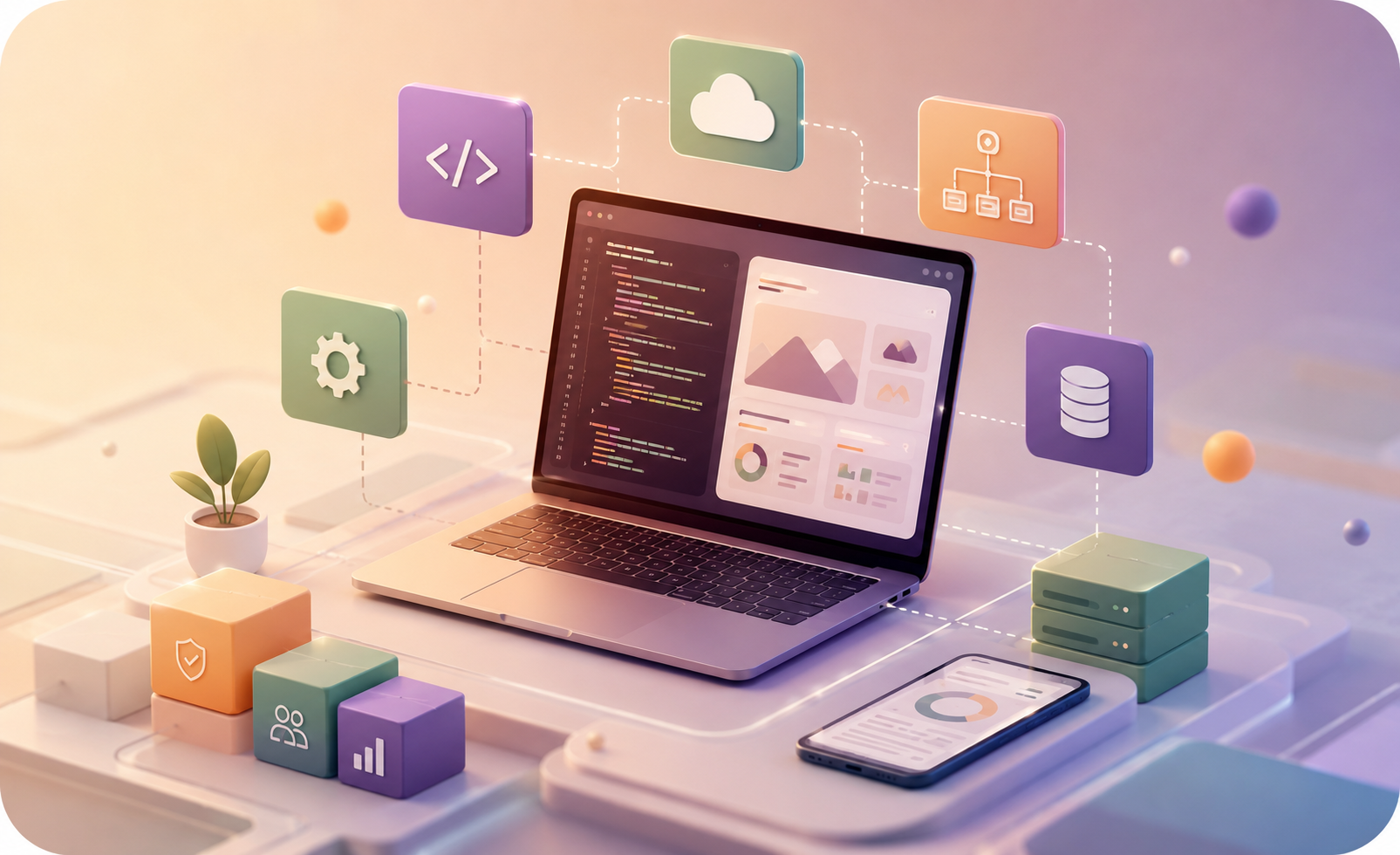
3Shadz custom software solutions for business
  • Experience Layer Web apps, portals, mobile, dashboards
  • Business Logic Your rules, roles, and workflows
  • Integration Layer APIs to ERP, CRM, payments, partners
  • Data & Cloud Foundation Secure storage, scale, and deployment
Web Applications SaaS Platforms Enterprise Systems Customer Portals Mobile Applications API Integration Workflow Automation Application Modernization
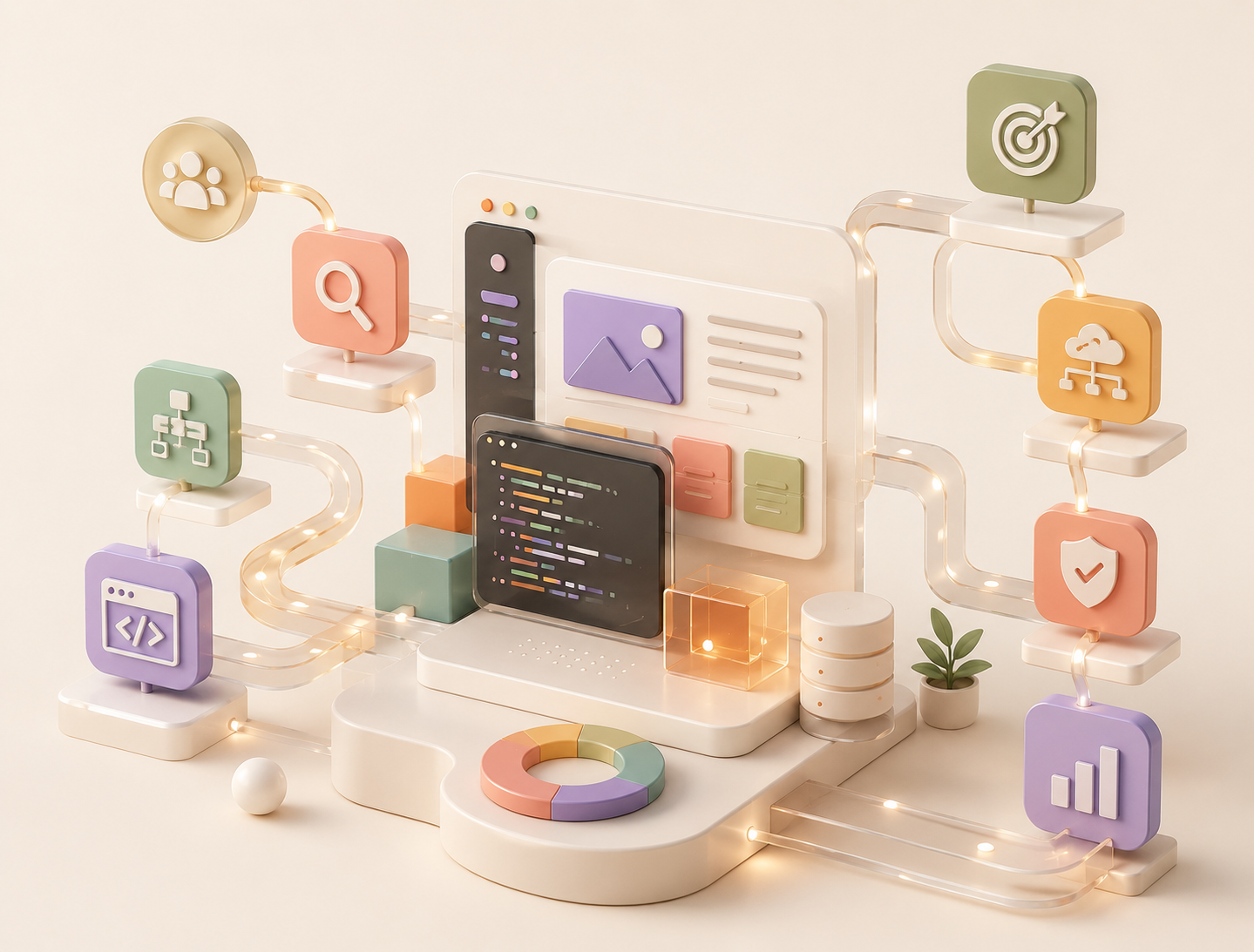
Custom software designed around real business workflows
Built for your process Not a template with your logo on it.
Custom Software

When Standard Software Stops Being Enough

Most businesses start with ready-made tools, and for a while they work. Growth is usually what exposes the gaps, more customers, more rules, more systems, more exceptions that the product was never built to handle.

The workarounds appear quietly. A spreadsheet here. A manual export there. A process that only one person fully understands. Teams spend more time moving information between tools than acting on it, and the software that was supposed to save time starts costing it.

Custom software removes that friction by fitting the business instead of the other way around. The workflow in the application is your workflow. The data model reflects how you actually operate. The integrations connect the systems you already depend on.

At 3Shadz, we treat custom software as a long-term business asset rather than a one-time build, designed for the users who rely on it, engineered for the load it will carry, and documented so it can be maintained and extended for years.

Do You Need It

Signs Your Business Has Outgrown Off-the-Shelf Software

If several of these sound familiar, the problem is usually not your team: it is the software asking your team to work around it.

Spreadsheets Are Holding the Process Together

Critical steps live outside your systems in files that only a few people know how to maintain.

The Same Data Is Entered Twice

Teams re-key information between tools because the systems were never designed to talk to each other.

Licence Costs Grow Faster Than Value

You pay per seat, per module, and per add-on for features most of your users never open.

Your Best Process Cannot Be Configured

The thing that makes you competitive is exactly the thing the product will not let you model.

Reporting Takes Days, Not Seconds

Answers require exports, manual joins, and a person to reconcile the numbers before anyone trusts them.

An Old System Is Blocking Progress

A legacy application still runs the business but is hard to change, hard to staff, and risky to touch.

Customers Expect a Better Experience

Clients or partners want self-service, visibility, and speed that your current tools cannot deliver.

You Have a Product Idea, Not a Product

There is a clear commercial opportunity, but no platform yet to deliver, bill, and support it.

Make the Right Call

Custom Software vs Off-the-Shelf Software

Ready-made products are the right answer for common, standardized needs. Custom software earns its place when the way you work is part of your advantage. Here is an honest comparison to help you decide.

A practical comparison of off-the-shelf products and custom-built software across the factors that usually decide the outcome.

Off-the-Shelf Software Custom Software
Fit to your process

You adapt your process to the product’s assumptions.

The product is shaped around how your business already works.

Time to first value

Fast to switch on, slower to make it truly fit.

Phased delivery puts a working first release in users’ hands early.

Cost structure

Recurring per-user licences that scale up with headcount.

Build investment upfront, then predictable hosting and support.

Feature roadmap

Set by the vendor and shared across all their customers.

Set by you, prioritized by your business impact.

Integrations

Limited to supported connectors and available APIs.

Built for the systems you actually run, including older ones.

Data & reporting

Reports constrained by the vendor’s data model.

Your data model, your metrics, your dashboards.

Scalability

Scales along the vendor’s pricing tiers and limits.

Architecture sized for your growth, load, and usage patterns.

Competitive advantage

Your competitors can buy the identical product tomorrow.

Capability that belongs to you and is difficult to copy.

Ownership

You license access; the vendor controls the software.

You own the source code, data, and intellectual property.

Best suited to

Standard, non-differentiating functions common to every business.

Core operations, customer experience, and revenue-driving workflows.

In practice, most organizations use both. We often keep proven products for standard functions and build custom software only where it creates real differentiation, then connect the two through integrations.

What We Build

Custom Software Solutions Engineered Around Your Business

Whatever the application, the method is the same: understand the workflow, design the experience, engineer it properly, and connect it to the systems around it.

Custom Business Applications

Software that runs the operations no product on the market supports.

We build applications around the processes at the centre of your business: operations, scheduling, approvals, case management, inventory, service delivery, compliance tracking, and the internal tools your teams use every day.

Role-based access, audit trails, and workflow automation are designed in from the start so the application supports governance rather than complicating it.

Explore Custom Software Development

Web Application Development

Fast, responsive web platforms for customers, partners, and internal teams.

We develop web applications, customer portals, partner platforms, booking and self-service systems, admin consoles, and reporting dashboards that work reliably across devices and browsers.

Performance, accessibility, and clean information architecture are treated as engineering requirements, not afterthoughts, because adoption depends on them.

Explore Web Application Development

SaaS Product Development

Multi-tenant platforms built to be sold, scaled, and supported.

We help product teams and founders build SaaS platforms with the foundations commercial software needs: tenant isolation, subscription and billing flows, onboarding, usage tracking, role management, and admin tooling.

Architecture decisions are made with the business model in mind, so pricing changes and new plans do not require re-engineering the platform.

Explore SaaS Development

Enterprise Application Development

Systems that hold up under real users, real volume, and real scrutiny.

For larger organizations we build enterprise-grade applications with complex permissions, multi-department workflows, high data volumes, and strict availability and audit requirements.

These systems are designed to sit alongside existing ERP, CRM, and operational platforms rather than compete with them, exchanging data through governed, well-documented interfaces.

Explore Enterprise Application Development

Mobile Application Development

Field, customer, and workforce apps that work where your users are.

We build native and cross-platform mobile applications for customer engagement, field operations, logistics, service teams, and internal productivity, including offline-capable experiences for users who are not always connected.

Mobile apps are delivered as part of the wider solution, sharing the same APIs, data model, and security rules as the web platform behind them.

Explore Mobile App Development

API Development & System Integration

Make the systems you already own work as one.

We design and build APIs, integration layers, and data exchange services that connect ERP, CRM, accounting, HR, payment, logistics, and third-party platforms, including older systems without modern interfaces.

The result is fewer manual handoffs, fewer reconciliation errors, and a single reliable flow of information across the business.

Explore API Development & Integration

Legacy Application Modernization

Move forward without switching the business off.

We assess ageing applications and recommend a realistic path, refactoring, re-architecting, replatforming to the cloud, rebuilding selected modules, or replacing the system in phases.

Data migration, parallel running, and staged cutover are planned in advance so modernization happens without putting daily operations at risk.

Explore Application Modernization

E-Commerce & Marketplace Platforms

Commerce experiences built for your catalogue, pricing, and fulfilment.

We build online stores, B2B commerce portals, and multi-vendor marketplaces with custom pricing rules, complex catalogues, quotation flows, and payment and shipping integrations.

Storefronts are connected to inventory, order management, and finance systems so what customers see reflects what your operations can deliver.

Explore E-Commerce Development
Included Capabilities

What Comes With Every Build

These are not optional extras quoted separately later. They are part of how we engineer software.

01

Product Discovery

Workshops that turn business goals, users, and constraints into a scoped, prioritized build plan.

02

UI/UX Design

Interface and interaction design focused on adoption: clear flows, fewer clicks, less training.

03

Solution Architecture

Technology, data model, and integration decisions documented before development starts.

04

Data Modelling & Migration

Clean schema design, plus mapping and migration of existing records into the new system.

05

Quality Assurance

Functional, regression, performance, and security testing across the delivery cycle.

06

DevOps & Deployment

Environment setup, CI/CD pipelines, and release automation for predictable, low-drama deployments.

07

Documentation & Handover

Technical documentation, API references, and knowledge transfer so your team is never locked out.

08

Support & Enhancement

Post-launch monitoring, fixes, updates, and planned enhancement releases as the business evolves.

Technology Stack

Proven Technology, Chosen for Your Requirements

We are not tied to a single stack. Technology is selected based on your use case, team, existing ecosystem, security needs, scale, and how the software must be maintained after launch.

Interfaces that stay fast and maintainable as features grow.

  • React
  • Angular
  • Vue.js
  • Next.js
  • Nuxt.js
  • TypeScript
  • JavaScript
  • HTML5 & CSS3
  • Tailwind CSS
  • Material UI (MUI)
  • shadcn/ui
  • Bootstrap
  • Redux Toolkit
  • Vite
  • Design Systems
How We Deliver

From Business Problem to Working Software

The same seven stages apply whether we are building a focused internal tool or a multi-year platform, only the depth of each stage changes.

  1. 01

    Discover

    We map the business problem, users, current workflow, existing systems, data, and the outcome that defines success.

  2. 02

    Define

    Requirements are turned into a prioritized scope, release plan, and a clear definition of the first version worth shipping.

  3. 03

    Design

    User journeys, interface design, data model, and solution architecture are agreed and documented before code is written.

  4. 04

    Build

    Development runs in short iterations with working software demonstrated regularly, so direction can be corrected early.

  5. 05

    Integrate

    APIs, third-party services, and existing business systems are connected, and legacy data is migrated and validated.

  6. 06

    Launch

    Functional, performance, security, and user acceptance testing precede a controlled release, training, and handover.

  7. 07

    Evolve

    We monitor real usage, resolve issues, tune performance, and ship enhancements as priorities change.

Connected Software

New Software That Respects What You Already Run

Very few custom applications start on a blank slate. Most have to live alongside systems that already hold the company’s data and trust.

We treat integration as a first-class part of the build. Before development begins, we identify which system owns each piece of data, how records should stay in sync, what happens when a service is unavailable, and how errors will be surfaced and resolved.

That planning is what prevents the most common failure of custom projects: a well-built application that nobody adopts because it does not reflect what the rest of the business already knows.

Plan Your Integration

Commonly connected systems

  • ERP and manufacturing platforms
  • CRM and sales tools
  • Accounting and billing systems
  • HR and payroll platforms
  • Payment gateways and wallets
  • Logistics and shipping providers
  • Messaging, email, and notifications
  • Identity providers and single sign-on
  • Analytics and reporting tools
  • Legacy in-house databases
Built to Be Trusted

Security, Quality, and Ownership Are Not Add-Ons

Custom software carries your operations and your data. These commitments are part of every engagement, not a premium tier.

Access Control by Design

Authentication, role-based permissions, and least-privilege access are defined during design, not patched in after a review.

Data Protection

Encryption in transit and at rest, secure secret management, and environment separation across development, staging, and production.

Compliance Awareness

Applications are engineered with your industry’s data protection, retention, and audit obligations taken into account from the outset.

Maintainable Code

Reviewed code, consistent standards, and automated tests so future changes are safe and affordable to make.

You Own It

Source code, repositories, documentation, and intellectual property are handed over under terms agreed before development starts.

Transparent Delivery

Regular demos, visible progress tracking, and direct access to the engineers building your software.

Engagement Models

Work With Us the Way That Fits Your Project

The right model depends on how clearly the scope is defined today and how much you expect it to change.

Fixed-Scope Project

Best when requirements are clear and the outcome is well defined.

  • Agreed scope, timeline, and cost
  • Milestone-based delivery and sign-off
  • Predictable budgeting and approvals
  • Ideal for first releases and defined modules
Most chosen

Dedicated Product Team

Best when the product will keep evolving after the first release.

  • A consistent team that learns your domain
  • Roadmap re-prioritized as the business changes
  • Continuous delivery in regular iterations
  • Ideal for SaaS platforms and long-term products

Team Extension

Best when you have an in-house team that needs added capacity or skills.

  • Engineers embedded in your existing process
  • Specific skills added without long hiring cycles
  • Your tools, your ceremonies, your standards
  • Ideal for scaling delivery or filling skill gaps
Why 3Shadz

A Software Partner, Not Just a Development Vendor

Writing code is the easy part. Understanding why the software matters, what it must connect to, and how it will be maintained, that is where projects are won or lost.

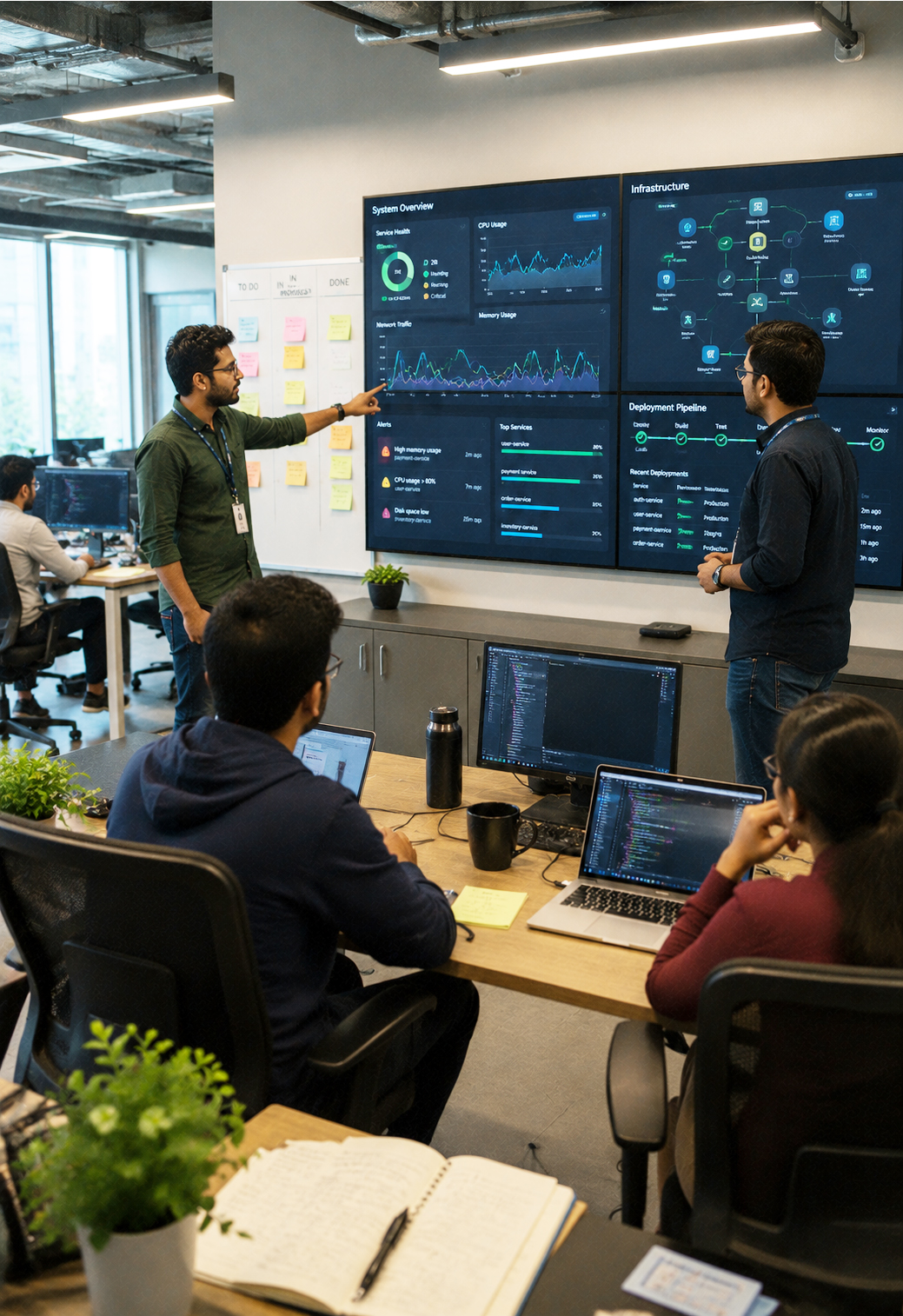
3Shadz software engineering team at work
01

Business Understanding First

We start with the process and the outcome, not the technology, so the build solves the real problem.

02

Full-Stack Delivery

Design, engineering, integration, cloud, QA, and support sit under one accountable team.

03

AI-Ready Architecture

Applications are structured so intelligent features can be added later without a rebuild.

04

Built to Be Handed Over

Clean code, documentation, and knowledge transfer mean you are never dependent on us by accident.

05

Realistic About Scope

We will tell you when a ready-made product is the better answer, and where custom work genuinely pays off.

06

Long-Term Ownership Mindset

We build for the version that exists three years from now, not just the one that ships first.

Beyond the Build

Custom Software Works Best as Part of a Bigger Picture

Our solutions are designed to connect, so software, AI, cloud, data, and enterprise systems reinforce each other instead of becoming separate projects.

Software + Artificial Intelligence

Add assistants, document intelligence, and intelligent automation into the applications your teams already use.

Explore Artificial Intelligence

Software + Digital Transformation

Rework the process itself, not just the interface, so modernization changes outcomes rather than appearances.

Explore Digital Transformation

Software + Enterprise Solutions

Extend ERP, CRM, and operational platforms with the capabilities they were never built to provide.

Explore Enterprise Solutions
Custom Software The connective core, everything here plugs into it

Software + Product Engineering

Take an idea from validated concept to a commercial product with a roadmap behind it.

Explore Startup & Product Engineering

Software + Cloud & Data

Give the application the infrastructure, pipelines, and reporting foundation it needs to scale.

Explore Cloud & Data Solutions

See How It All Connects

Review the full set of 3Shadz technology solutions and how they work together across your ecosystem.

Explore All Solutions
FAQ

Custom Software Solutions FAQs

Custom software solutions are applications designed and built for a specific organization rather than sold as a standard product. The features, workflows, data model, integrations, and user experience are shaped around how that business actually operates, instead of asking the business to adapt to a fixed product.

Custom software usually makes sense when your process is a competitive advantage, when teams rely on spreadsheets and manual workarounds to fill product gaps, when licence costs rise faster than the value delivered, when systems do not talk to each other, or when no available product supports the way your business needs to work.

We build web applications, SaaS platforms, enterprise and internal business systems, customer and partner portals, mobile applications, workflow and operations software, e-commerce and marketplace platforms, dashboards and reporting tools, APIs and integration layers, and modernized versions of existing legacy applications.

Yes. Most custom applications we deliver are designed to connect with existing systems such as ERP, CRM, accounting, HR, payment, logistics, and third-party platforms through APIs, secure data exchange, webhooks, and integration services, so information moves between systems instead of being re-entered.

Timelines depend on scope, integration complexity, compliance requirements, and how clearly the requirements are defined. A focused first release or minimum viable product is typically delivered in a shorter cycle, while larger platforms are delivered in phased releases so value reaches users before the entire scope is complete.

Cost is driven by scope, number of user roles and workflows, integrations, data volume, security and compliance needs, platforms supported, and the level of ongoing support required. We scope work in phases so you can start with a well-defined first release and expand based on results rather than committing to everything upfront.

Ownership terms are agreed before development begins and are documented in the engagement agreement. Our standard approach is that the client owns the delivered source code and related intellectual property, with repositories, documentation, and deployment assets handed over.

Yes. We assess the existing application, data, and integrations, then recommend an approach such as refactoring, re-architecting, replatforming to the cloud, rebuilding selected modules, or a phased replacement that keeps the current system running while new capabilities are introduced.

Security is built into the engineering process through authentication and role-based access control, encryption in transit and at rest, secure API design, input validation, dependency and vulnerability checks, environment separation, audit logging, and controlled deployment practices, aligned to the compliance requirements of your industry.

After launch we can provide application support and maintenance, monitoring, performance tuning, security updates, bug fixes, enhancement releases, and roadmap planning, so the software continues to evolve with the business rather than becoming the next legacy system.

We work through fixed-scope project delivery for well-defined requirements, dedicated product teams for evolving roadmaps, and team extension where our engineers work alongside your in-house team. The model is chosen based on how clear the scope is and how much ongoing change you expect.

Start with the business problem. Share the process, product idea, or system limitation you want to address, and we will help define the scope, technical approach, delivery phases, and a practical first release you can validate with real users.

Build What Fits

Describe the Problem. We’ll Help You Scope the Software.

You do not need a finished specification to start a conversation. Tell us about the process that keeps breaking, the system that will not connect, the product you want to launch, or the legacy application everyone is afraid to touch. We will help you define what is worth building first, what it will take, and how to deliver it in phases that make sense for your business.