









Technology Built Around How Your Industry Actually Works
Every industry runs on a different combination of business model, customer expectation, regulation, legacy system, and risk tolerance. The right technology direction rarely looks the same twice.
3Shadz brings Artificial Intelligence, software engineering, cloud, data, and digital transformation across industries, shaped around how each one actually operates, not a single template applied everywhere.
Explore Our Industries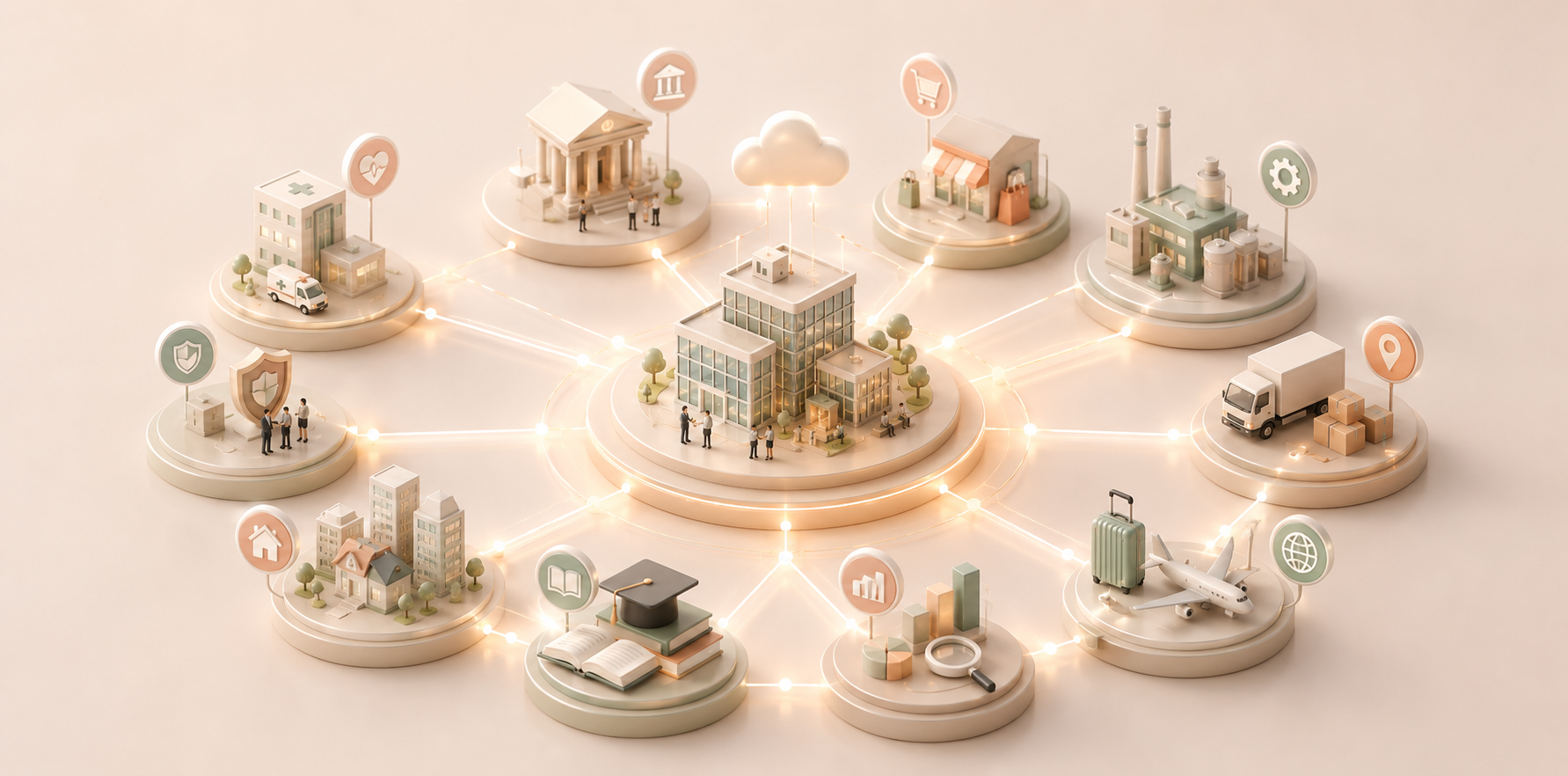
Industry Context Changes the Technology Decision
The same capability (AI, a customer platform, a data pipeline) gets built differently depending on where it has to operate.
The right architecture, workflow, product experience, or AI capability depends on the environment around it: who the users are, what rules apply, what already exists, and what a mistake actually costs.
Before we recommend a direction, we try to understand that environment as clearly as the technology itself. A few examples of how priorities shift by industry:
- Healthcare
- Clinical workflows, patient information, interoperability and reliability shape almost every decision.
- Financial Services
- Transaction integrity, risk, auditability and regulatory controls come first.
- Retail
- Customer experience, inventory, fulfillment and omnichannel commerce set the pace.
- Manufacturing
- Production continuity, plant systems and equipment data drive the architecture.
- Startups
- Speed, product-market fit and a foundation that can scale without premature complexity.
Across Industries. Built Around Expertise.
Every card links through to a dedicated page covering that industry’s operating realities and the technology approach we bring to it.
One Technology Capability. Different Industry Outcomes.
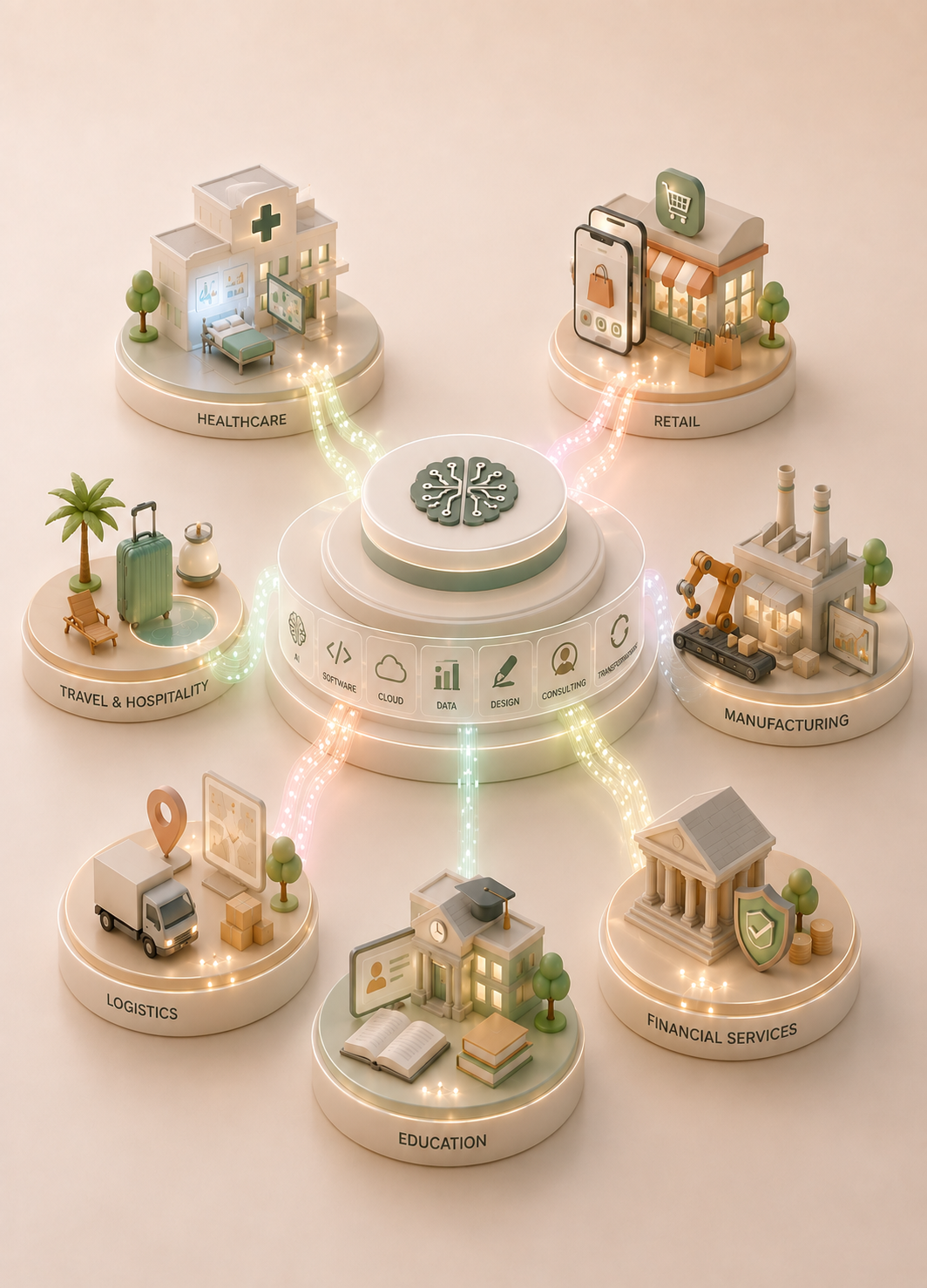
Our underlying capabilities (Artificial Intelligence, custom software, cloud, data, digital transformation, experience design, and technology consulting) stay consistent. What changes is how each one gets applied.
In Healthcare, it supports clinical documentation, knowledge retrieval and administrative workload, without stepping in front of clinical judgment.
In Retail, it supports merchandising decisions, customer assistance and demand signals across channels.
In Manufacturing, it supports quality inspection, predictive maintenance and production intelligence.
The same pattern applies across cloud, data and every other capability we bring: see the full set on Services.
The Technology Is Only Part of the Problem
Before we recommend or build anything, we look at the complete operating environment around it: the forces that shape what a good solution actually looks like.
Regulation
Rules that vary by industry, region and data type shape what can be built and how fast.
Security & Privacy
Sensitive data changes the baseline for access, encryption and audit trails.
Legacy Systems
Years of prior investment rarely gets replaced overnight: it gets integrated with.
Existing Workflows
People already have a way of working; technology has to fit into it, not fight it.
Customer Behavior
How people actually shop, book or transact rarely matches the assumptions in a spec.
Physical Operations
Software has to stay in sync with what is happening on the ground, in real time.
Integration Requirements
Few systems operate alone: most decisions ripple into several other platforms.
Reliability
Some environments can tolerate a bug. Others cannot tolerate five minutes of downtime.
Accessibility
Public-facing and public-sector systems need to work for every user, not most users.
Geographic Scale
What works for one location rarely works unmodified across ten.
Organizational Maturity
The right architecture depends on what a team can actually operate and maintain.
Cost & Adoption
Budget shapes sequencing, and technology only creates value once people actually use it.
Industries Don’t Map to a Single Technology
Most industry problems draw on several capabilities at once, combined in a different mix each time.
Healthcare
- Artificial Intelligence
- Cloud
- Data
- Custom Software
- Digital Experience
- Integration
- Security
Retail
- Commerce Platforms
- Data
- Artificial Intelligence
- Mobile
- Cloud
- Integrations
- Automation
Manufacturing
- Enterprise Systems
- Data
- Cloud
- Automation
- Artificial Intelligence
- Integration
- Modernization
Patterns Travel. Assumptions Shouldn’t.
Working across industries builds useful perspective, but it only helps if the differences between industries are respected, not glossed over.
What Travels
- Platform thinking
- Workflow automation
- Data architecture
- Digital self-service
- AI-assisted operations
- Integration & observability
- Modernization discipline
- Product engineering practice
What Has to Change Per Industry
- Who the users are and what they expect
- The rules and regulatory obligations in play
- The workflows and systems already in place
- How much risk the environment can tolerate
- The economics and procurement realities
- What “reliable” actually has to mean
Industry Is the Environment. Solutions and Services Are the Work.
Industries shape the operating context. Solutions and Services describe what we actually build inside it.
Solutions
The broader technology outcomes we help organizations reach: AI, custom software, digital transformation, enterprise, product engineering, cloud and data.
Explore SolutionsServices
The specialist engineering, design, AI, cloud, data and consulting disciplines that get combined to deliver those outcomes.
Explore ServicesStart With the Industry Problem, Not the Technology Pitch.
Tell us how the operation works today, where technology is getting in the way, what needs to change, and what constraints can’t be ignored. From there, we can help determine the right combination of strategy, engineering, AI, data, cloud and modernization.