











Where Software Becomes Personal
Mobile is where a product stops being an application and starts being part of someone's day, carried in a pocket, opened between meetings, trusted with things that matter.
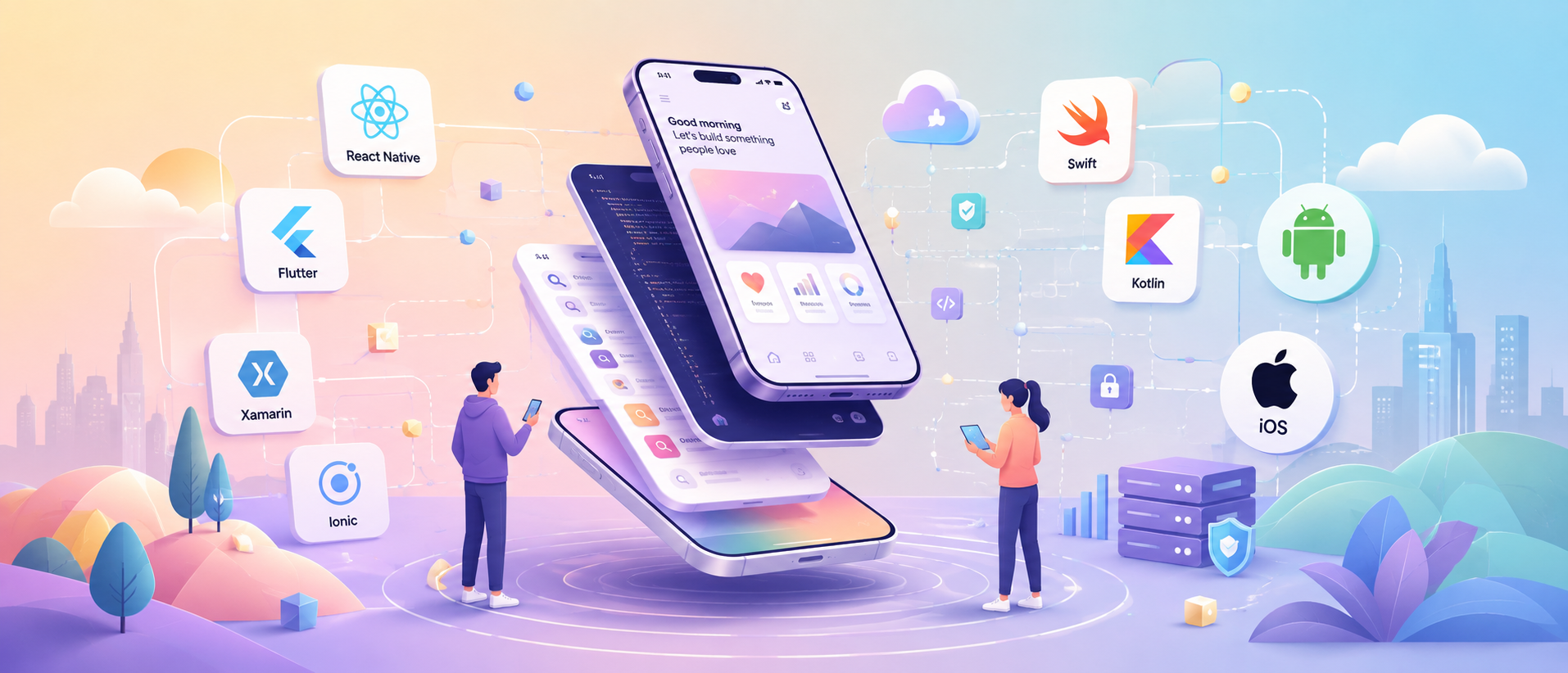
3Shadz engineers mobile experiences that hold up under real conditions: shifting networks, different devices, and the platform expectations that come with them. We build natively with Swift and Kotlin, and across platforms with React Native, Flutter, Xamarin and Ionic, choosing the path that fits the product, as part of the same connected technology stack we bring to backend, cloud, and data engineering.
- React Native
- Flutter
- Swift
- Kotlin
- Xamarin
- Ionic
Mobile Is the Product in Someone's Hands
A mobile product is judged in seconds, on a screen far smaller than a desktop, often with one hand, sometimes with unreliable signal. Every interaction has to account for that reality, not as a constraint to work around, but as the actual context the product lives in.
3Shadz approaches mobile engineering as its own discipline, not a smaller version of the web. That means designing for touch and motion, respecting how each platform behaves, and building software that keeps working when the network, the device, or the moment isn't ideal.
- Interaction
- Performance
- Device Capabilities
- Connectivity
- Security
- Platform Behavior
- User Context
- Maintainability
The Right Engineering Path for the Product
3Shadz chooses between native and cross-platform engineering based on what the product needs to do, not a default framework. Both paths lead to the same standard of quality: they just get there differently.
Cross-Platform Engineering
A single codebase shared across Android and iOS: well suited to products that need to move fast, share logic across an existing team, or reach both platforms without maintaining two parallel apps.
- React Native
- Flutter
- Xamarin
- Ionic
Native Engineering
Platform-specific code built directly against Swift and Kotlin: chosen when a product needs the deepest access to device capabilities, the highest performance ceiling, or the most platform-native feel.
- Swift (iOS)
- Kotlin (Android)
Neither path is the default. The decision depends on the product's complexity, timeline, team, and how deeply it needs to reach into the device.
Mobile Engineering, One Capability at a Time
Seven areas we consider on every mobile engagement, not always all at once, but always deliberately.
Mobile UI Engineering
Interfaces designed for touch, gesture, varying screen sizes and the real, sometimes messy conditions people actually use their phones in.
Native Device Capabilities
Camera, location, notifications, biometrics, sensors and storage, integrated only where the product genuinely needs them.
Performance Engineering
Fast startup, responsive interactions and efficient use of memory and battery, built in rather than optimized in afterward.
API & Backend Connectivity
Reliable communication between the app and the services behind it, designed as part of the same system rather than bolted on.
Authentication & Security
Secure authentication, session handling and protection of sensitive data on a device that isn't always in the user's control.
Offline & Connectivity-Aware Experiences
Mobile experiences that stay useful when a connection drops or slows, instead of simply failing.
Release & Platform Management
Supporting the different release cycles, review processes and update behavior of the Android and iOS ecosystems.
From First Tap to Everyday Habit
Six stages we move through on a mobile engagement, from the first idea to a product people keep coming back to.
Discover
Understand the product, the users, and the real conditions the app needs to work in.
Design
Shape interfaces around touch, motion and the platform conventions people already expect.
Engineer
Build with the native or cross-platform approach the product actually calls for.
Connect
Wire the app into APIs, authentication and the backend systems behind it.
Optimize
Tune performance, startup time and resource use for real devices and real networks.
Evolve
Keep refining the product as usage, platforms and expectations change.
Performance People Notice Immediately
Mobile users feel a slow app before they can explain why. These are the areas we pay attention to on every build.
Consistent Product Thinking, Two Platforms
Android and iOS have different interaction patterns, review processes and user expectations. We respect those differences while keeping the underlying product experience coherent.
Android
Built for the openness and variety of the Android ecosystem: a wide range of devices, screen sizes and hardware, each expecting familiar Android interaction patterns.
iOS
Engineered around Apple's tighter platform conventions, review process and the interaction patterns iOS users expect by default.
Mobile Technologies, One by One
The frameworks, languages and platforms that make up our mobile stack today, described in a bit more detail.
Cross-Platform Frameworks
React Native
A component-based framework for building cross-platform apps with a shared codebase and near-native performance.
Flutter
A UI toolkit built around a single codebase and a consistent rendering engine across Android and iOS.
Xamarin
A .NET-based framework for building cross-platform apps that share logic across platforms.
Ionic
A framework for building cross-platform mobile experiences using familiar web technologies.
Native Engineering
Swift
Apple's native language for building performant, platform-native iOS applications.
Kotlin
Google's preferred language for modern, native Android application development.
Platforms
Android
The open, widely used mobile operating system maintained by Google, running across a broad range of devices.
iOS
Apple's mobile operating system, running across iPhone and iPad within a more tightly controlled ecosystem.
The App Is Only the Surface
What a user sees on their screen is the smallest visible part of a mobile product. Underneath it are the systems that make it actually work.
- APIs
- Authentication
- Data
- Cloud Infrastructure
- Analytics
- Security
- Release Processes
- Backend Systems
3Shadz doesn't treat mobile as an isolated frontend layer. It connects to the same backend systems, APIs and cloud infrastructure that power the rest of the product.
Build the Experience People Carry With Them.
Whether you're launching a new mobile product, modernizing an existing app, or deciding between native and cross-platform, 3Shadz can help shape the engineering approach behind it.