










Cloud Foundations That Scale With the Product, Not Against It
Cloud technology isn't the finish line for a product: it's the foundation everything else stands on. The platform, orchestration and automation choices made early shape how fast a team can move later.
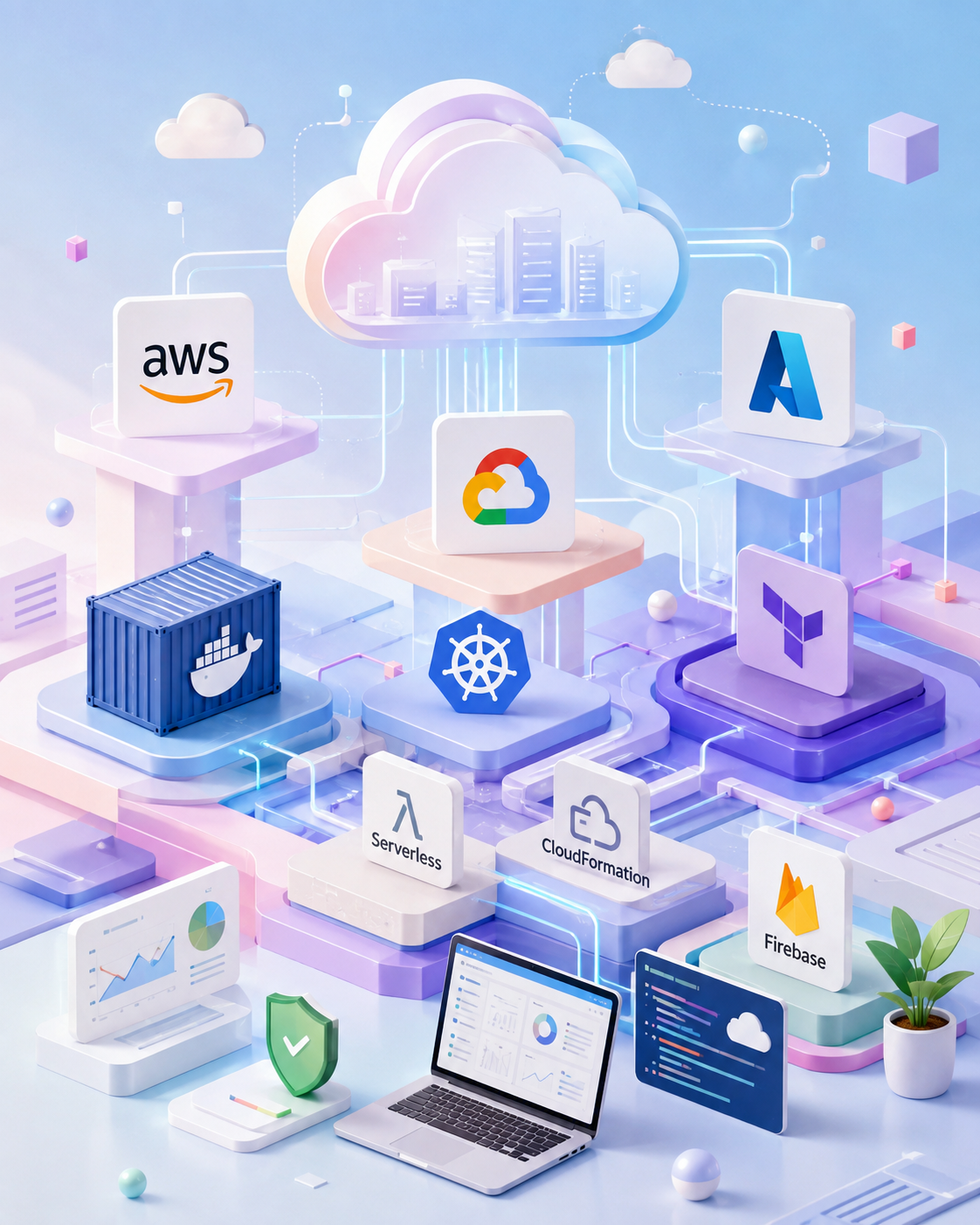
3Shadz engineers cloud environments across AWS, Microsoft Azure and Google Cloud, using Docker, Kubernetes, Terraform and serverless architecture to build infrastructure that's automated, observable and ready to evolve, as part of the same connected technology stack we bring to frontend, backend, and mobile engineering.
- AWS
- Azure
- Google Cloud
- Kubernetes
- Docker
- Terraform
Cloud Is the Foundation, Not the Finish Line
Moving an application to AWS, Azure or Google Cloud isn't the end of a cloud strategy: it's the starting point. What actually determines whether a product performs well, scales predictably and stays secure is how the infrastructure around it is architected.
3Shadz treats cloud architecture as a long-term decision, not a deployment task. Every choice (how services are containerized, how infrastructure is provisioned, how environments are automated) shapes how easily a product can grow, change and recover from failure later.
-
01
Application PerformanceHow infrastructure is architected directly affects how fast and consistent a product feels.
-
02
ScalabilitySystems designed to handle growth without a rebuild every time demand increases.
-
03
Deployment VelocityHow quickly and safely a team can ship changes to production.
-
04
ReliabilityInfrastructure that keeps working predictably, even when parts of it fail.
-
05
SecurityAccess control, data protection and secure configuration built into the architecture itself.
-
06
CostInfrastructure that scales efficiently rather than growing costs faster than usage.
-
07
ObservabilityVisibility into how systems actually behave once they're running.
-
08
Future EvolutionA foundation flexible enough to support the technology decisions a product hasn't made yet.
Technologies That Work Together, Not in Isolation
Cloud engineering rarely comes down to a single technology. These are the platforms, tools and patterns we combine depending on what a product actually needs.
Cloud Platforms
Containers & Orchestration
Infrastructure as Code
Cloud-Native Development
From Infrastructure to the People Using It
A cloud architecture is only as good as what it enables. Here's the path from raw infrastructure to the experience a person actually has.
Cloud Engineering, In Practice
Eleven areas of cloud engineering we draw on across projects, combined differently depending on what a product needs.
Designed for Scale, Built for Change
A product's infrastructure needs today are rarely its infrastructure needs in two years. We architect cloud environments that can grow in complexity when the product actually requires it, not before, and not by accident.
- Scaling Without Unnecessary Complexity
- Modular Architecture
- Automation
- Repeatable Infrastructure
- Resilient Deployments
- Observability
- Security-Conscious Architecture
- Cost-Aware Engineering
Six Principles Behind Every Cloud Decision
Not a framework or a checklist, just the considerations that shape how we approach cloud architecture on every engagement.
Infrastructure and deployments should be repeatable, not manual.
Architecture should adapt as demand changes, not just handle a launch spike.
Systems should be designed to handle failure, not just avoid it.
Engineering teams need real visibility into how systems actually behave.
Security belongs in the architecture, not bolted on afterward.
A cloud foundation should leave room for technology choices a product hasn't made yet.
Build the Cloud Foundation Your Product Can Grow On.
Whether you're modernizing existing infrastructure, planning a cloud migration, or architecting a new product from the ground up, 3Shadz can help shape the cloud engineering approach behind it.