











Frontend Technologies That Turn Ideas Into Exceptional Digital Experiences
Frontend engineering is where architecture becomes interaction: the layer where every backend decision, business rule, and design intention finally becomes something people can see, trust, and use.
At 3Shadz, building a frontend means more than assembling screens. We design component-driven systems, apply modern JavaScript and TypeScript, and build with the frameworks, styling systems, and state architecture a product actually needs, as part of the same connected technology stack we bring to backend, cloud, and data engineering.
The result is an interface that stays fast as a product grows, structured enough for teams to build on for years, and accessible to the people who depend on it.
- React
- Next.js
- Angular
- Vue.js
- TypeScript
- Tailwind CSS
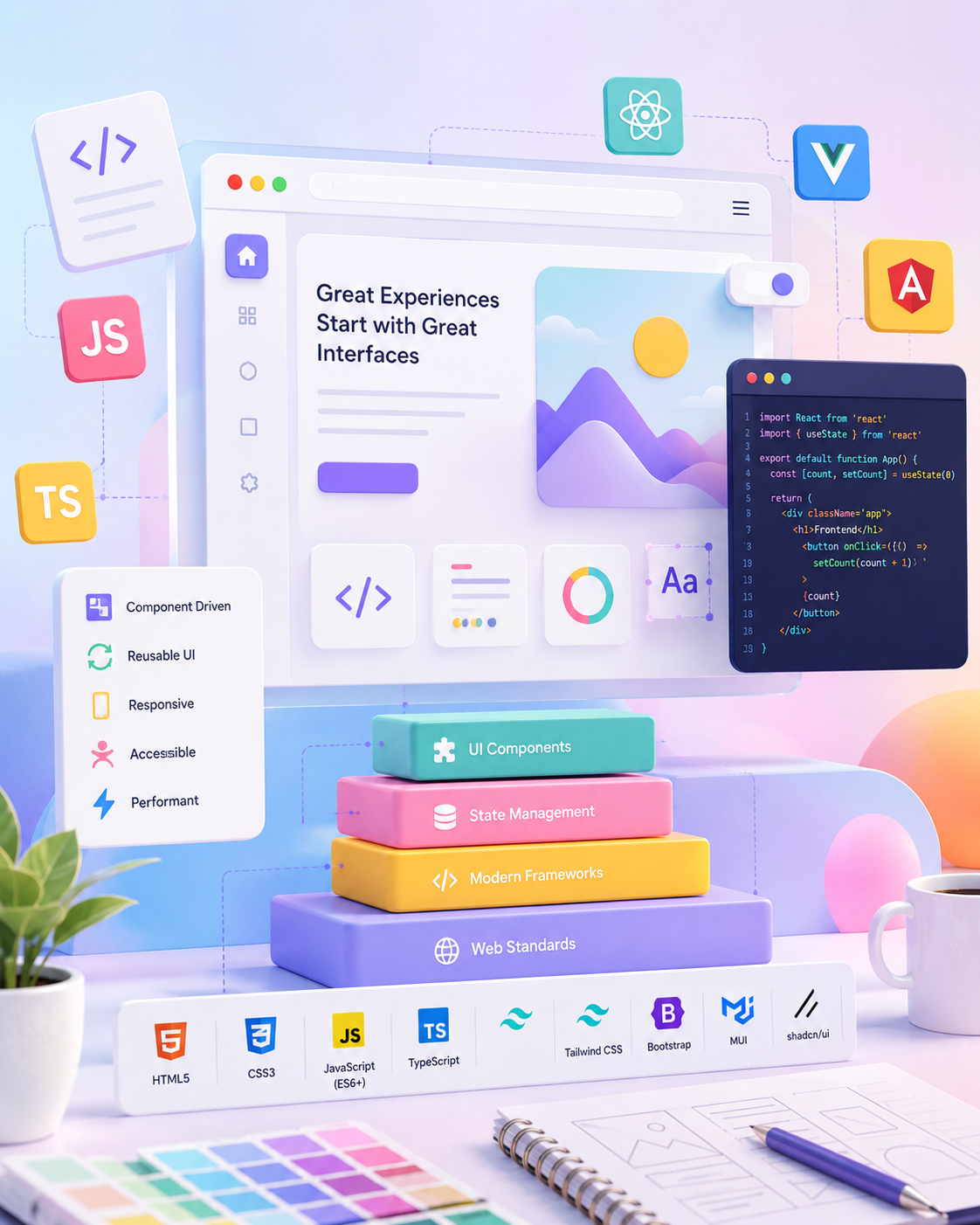
Five Layers, One Connected Interface
We treat the frontend as a living layer of the product: the place where business logic, data, and design intent become something real for the people using it. Every layer below exists to support the one above it.
The frameworks that shape how a product behaves, routing, rendering strategy, and the structure large applications are organized around.
- React
- Angular
- Vue.js
- Next.js
- Nuxt.js
The styling systems and component libraries that turn design intent into a consistent, reusable visual language across a product.
- Tailwind CSS
- Material UI (MUI)
- Bootstrap
- shadcn/ui
The logic layer: structured state, predictable data flow, and typed code that keeps a growing application understandable.
- TypeScript
- JavaScript (ES6+)
- Redux Toolkit
The semantic, standards-based foundation every browser understands: accessible markup and styling that everything else is built on.
- HTML5
- CSS3
The tooling that compiles, bundles, and serves everything above it: fast enough that development itself never becomes the bottleneck.
- Vite
A Framework Choice Is Not a Strategy
Choosing a frontend framework is one decision among many. What actually determines whether a product holds up is the architecture built around it.
The interface is the layer where a product's engineering finally becomes something a person can use.
A well-architected frontend organizes components, data flow, and styling so a team can extend a product without re-learning it every time. A poorly architected one turns every new feature into a negotiation with code nobody fully understands anymore.
We design frontend systems the same way we approach web application development more broadly, around how the product will need to change, not just how it looks on day one.
-
MaintainabilityCode and components a team can safely change months or years later.
-
ScalabilityStructure that holds up as features, traffic, and teams grow.
-
ConsistencyA shared design system so the product feels like one product.
-
Developer ProductivityClear patterns so engineers spend time on features, not friction.
-
Long-Term EvolutionA foundation built to be extended, not replaced every few years.
Frontend Capabilities, in Practice
Seven areas of frontend engineering we apply on every product, not as separate specialties, but as parts of one connected discipline.
Component-Driven Interfaces
We build interfaces as systems of reusable components rather than one-off pages. A consistent design system and clear component boundaries mean new features ship faster and existing ones stay easier to change.
Modern JavaScript & TypeScript
Modern JavaScript (ES6+) and TypeScript give frontend applications structure that scales with a team, not just a feature. Typed interfaces and clear contracts between components reduce the kind of bugs that only show up in production.
Frameworks for Different Product Needs
React, Angular, Vue.js, Next.js, and Nuxt.js each solve frontend problems differently, rendering strategy, application structure, ecosystem, and team familiarity all matter. We choose the framework that fits the product, not the other way around.
Performance by Design
Speed is treated as a design constraint, not an afterthought. Efficient rendering, code splitting, lazy loading, and optimized assets keep interfaces responsive as a product's features and content grow.
Responsive & Accessible Experiences
A mobile-first layout and semantic, standards-based HTML mean interfaces work across devices and are usable with a keyboard or assistive technology: part of how we approach every UI/UX design engagement, not a separate checklist.
Scalable State & Application Architecture
Redux Toolkit and structured state patterns keep data flow predictable as an application grows, so a new feature doesn't mean untangling how five existing ones already manage state.
Modern Development Workflow
Vite and a modern build pipeline keep local development fast and production builds lean, feeding into the same automated delivery pipelines that ship the rest of the product.
The Right Frontend Stack Depends on the Product
There is no universally "best" frontend framework, only the one that fits a product's complexity, performance needs, and the team maintaining it long after launch.
- Product Complexity
- Team Expertise
- Performance Requirements
- SEO Requirements
- Scalability
- Integration Requirements
- Development Speed
- Long-Term Maintenance
These are common patterns we see across projects, not fixed rules. The right technology choice always depends on the specifics of your product, team, and constraints.
The 3Shadz Frontend Engineering Approach
Five stages we move through on every frontend engagement, from the first conversation to the interface that ships.
Understand
We start with business goals, user workflows, and technical constraints, not a framework preference.
Architect
We choose the frontend architecture and technology stack the product actually needs, from rendering strategy to state management.
Build
We develop reusable, responsive, well-structured components and interfaces engineered for maintainability.
Validate
We test functionality, responsiveness, accessibility, performance, and integration before anything ships.
Evolve
We keep refining the frontend as the product, its users, and its requirements grow.
What Strong Frontend Engineering Makes Possible
Frontend architecture decisions eventually show up as business outcomes, not just code quality.
Faster Experiences
Performance-focused frontend architecture can create smoother, more responsive user journeys.
Consistent Experiences
Reusable components and design systems help maintain consistency across products and platforms.
Easier Evolution
Well-structured frontend systems make future changes and new features easier to implement.
Better Accessibility
Accessible interfaces allow more people to interact with your digital products successfully.
Scalable Foundations
Modern frontend architecture can support products as functionality, traffic, and teams grow.
Frontend Technologies, One by One
The frameworks, languages, and tools that make up our frontend stack today, described in a bit more detail. Many of these also connect directly to AI-powered features as products add intelligent capabilities to the interface.
Core Web
HTML5
The semantic backbone of every interface, structured for accessibility and search engines alike.
CSS3
Modern styling capabilities (layout systems, animation, and responsive behavior) without relying on hacks.
JavaScript (ES6+)
The language that makes interfaces interactive, written with modern syntax built for clarity and maintainability.
TypeScript
Structured JavaScript development for more predictable and maintainable applications.
Frontend Frameworks
React
A component-based library for building interactive interfaces with a large ecosystem and flexible architecture.
Next.js
A React framework built around rendering strategy, routing, and performance for content- and SEO-driven products.
Angular
A complete application framework with built-in structure, suited to large, complex, enterprise-scale products.
Vue.js
An approachable, flexible framework for building interactive interfaces without a steep learning curve.
Nuxt.js
A Vue.js framework that adds structured rendering and routing for content-focused, SEO-conscious applications.
Styling & UI
Tailwind CSS
A utility-first styling approach that keeps design consistent while moving fast.
Bootstrap
A proven component and grid framework for building consistent layouts quickly.
Material UI (MUI)
A React component library built around Google's Material Design principles, useful for structured, consistent interfaces.
shadcn/ui
A composable set of accessible UI components built for full design control rather than a locked-in theme.
State & Application Architecture
Redux Toolkit
A structured, predictable approach to managing application state as complexity grows.
Development & Build
Vite
A fast build tool and development server that keeps local development quick and production builds lean.
Let’s Architect an Interface That Can Grow With Your Product.
Whether you're starting a new digital product, modernizing an existing application, or building a scalable frontend platform, 3Shadz can help shape the architecture and engineering approach behind it.