




Citizen Service Platforms
Digital service platforms built around how citizens actually need to access and complete services.

Browse our current openings and find a role that matches your skills and ambition.
Know more ▸
Get a feel for our culture, our people and the way we work together every day.
Know more ▸
Health, flexibility and growth benefits designed to support you and your family.
Know more ▸

Kickstart your career with hands-on internship opportunities and mentorship.
Know more ▸
3Shadz helps government and public sector organizations modernize citizen service platforms, data, cloud and AI capabilities, without breaking accessibility, security or continuity.
Citizen services depend on modernizing legacy systems responsibly, for a public that spans every device, ability and level of digital comfort.
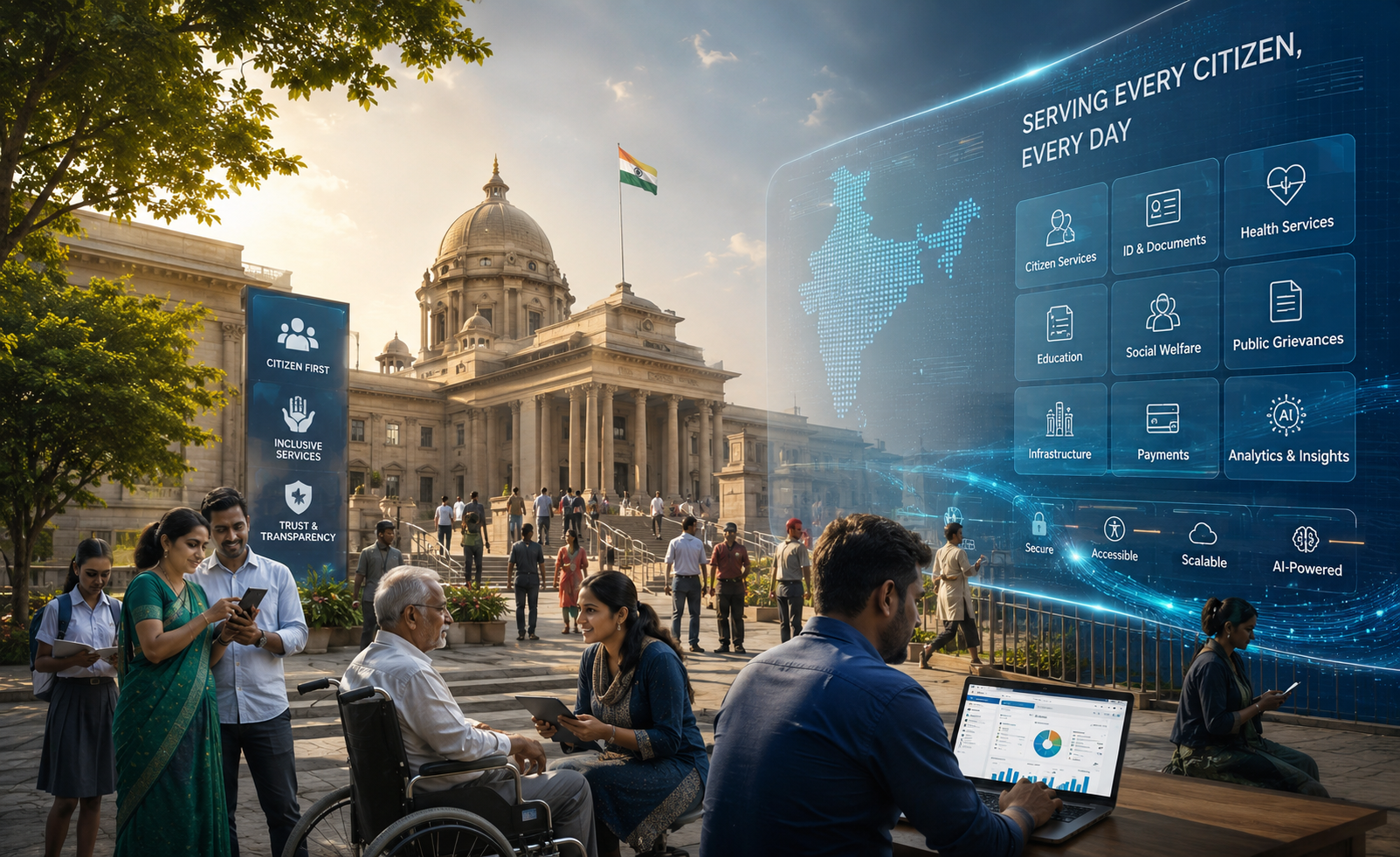
Citizen services depend on modernizing legacy systems responsibly, without breaking accessibility, security or continuity. The systems have to serve the full range of the public they were built for.
3Shadz approaches government technology with accessibility and reliability as first-class requirements, not late additions.
Systems built for the full range of the public they serve.
From modern smartphones to shared public terminals.
Designed to work for people with different needs.
Toggle the sample below to see how our approach adapts for citizens who need a higher-contrast experience.
Complete your renewal online in a few simple steps, from any device.
Start RenewalThese capabilities aren’t unique to government on their own, what matters is how we apply them to the accessibility and reliability the public sector requires.
Digital service platforms built around how citizens actually need to access and complete services.
Modernizing legacy public sector systems responsibly, without disrupting continuity of service.
AI support for document processing and case routing, with people making the final decisions.
Interfaces and experiences engineered for accessibility standards from the start.
Cloud architecture built with the security and reliability public systems require.
Data platforms and reporting that support transparency and better decisions.
Before recommending a direction, we start with the realities that shape what a good solution actually looks like in the public sector.
| Constraint | What It Means |
|---|---|
| Legacy Infrastructure | Years of prior investment don’t get replaced overnight: they get integrated with, carefully. |
| Regulatory & Compliance Requirements | Rules vary by jurisdiction and shape what can be built and how fast. |
| Accessibility for All Citizens | Public-facing systems need to work for every user, not most users. |
| Data Privacy & Security | Citizen data carries a different weight than most software problems. |
| Budget & Procurement Cycles | Public sector budgeting shapes sequencing and pace of delivery. |
| Multi-Agency Coordination | Systems often need to work across departments and agencies. |
| Public Trust & Transparency | Citizens expect clarity about how their services and data are handled. |
| Scale Across Large Populations | Systems need to perform reliably for very large, diverse user bases. |
We approach every one of these as a technology and engineering consideration. 3Shadz is a software and technology partner: policy, legal and regulatory decisions remain the responsibility of the agency and its counsel.
These are the principles that guide how we approach government technology work.
Public systems have to work for people with different devices, abilities and digital comfort.
Legacy systems carry real institutional knowledge: modernization has to respect that.
Accessibility is designed in from the first wireframe, not retrofitted after launch.
Citizen data carries a different weight, and systems are engineered accordingly.
Public systems need to keep working reliably for large populations over time.
AI is a meaningful part of how 3Shadz approaches public sector technology, applied to the paperwork and workload behind citizen services.
Eligibility, policy and case decisions stay with agency staff. AI supports the process, not the decision.
Extracting and organizing information from submissions.
Helping route requests to the right team faster.
Helping citizens find answers to common questions.
Supporting access for non-native language speakers.
Where we draw the line: our AI work supports document processing, case routing and citizen inquiry assistance. Eligibility, policy and case decisions remain the responsibility of agency staff.
Citizen data and public systems require a security posture built in layers, not a single checkbox.
Protecting systems at the network boundary.
Controlling who can access what, and when.
Protecting citizen data at rest and in transit.
Keeping a clear record of system activity.
Good public sector technology looks different depending on who is using it.
A consistent way of working, applied to whatever combination of citizen service technology, AI, cloud and data the engagement calls for.
Understand the agency and its citizens first.
Define the right technical direction.
Develop and integrate what’s needed.
Improve existing systems with purpose.
Keep pace as needs change.
A compact set of technology categories rather than an exhaustive logo wall: each one shows up differently depending on the public sector problem in front of it.
Tell us about your agency, citizens and technology challenges today. From there, we can help determine the right combination of software engineering, AI, cloud, data and modernization for your organization.